
Roundtables, lectures, and hackathons that bring researchers, artists, engineers, and educators together to explore what's possible at the intersection of disciplines.
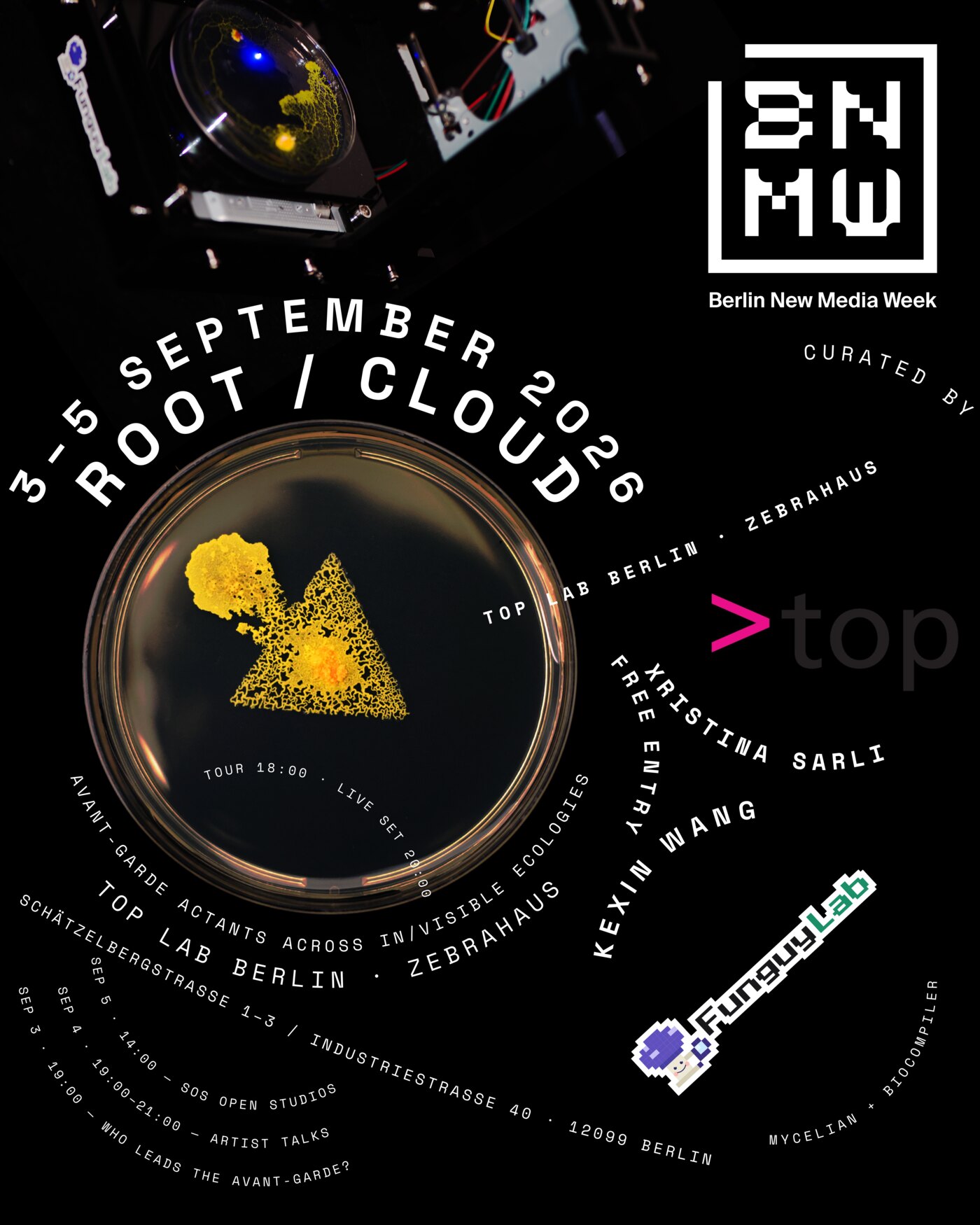
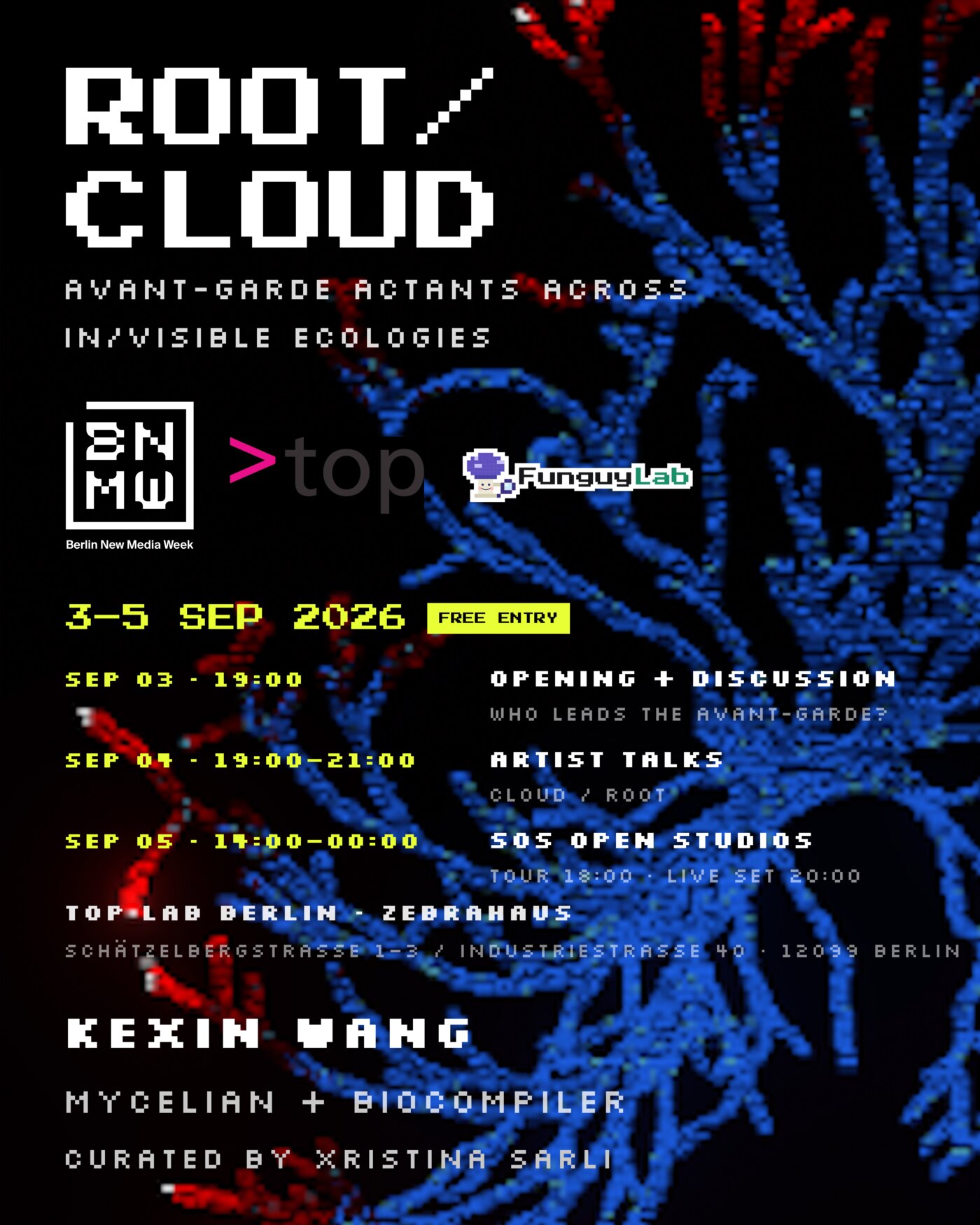
Interdisciplinary artist and researcher Kexin Wang joins Berlin New Media Week's ROOT / CLOUD — avant-garde actants across in/visible ecologies — as a participating artist and speaker, showing Mycelian + Biocompiler: programmable laser light guiding living slime mold and fungi into designed forms, where computation and biology grow together rather than one controlling the other.
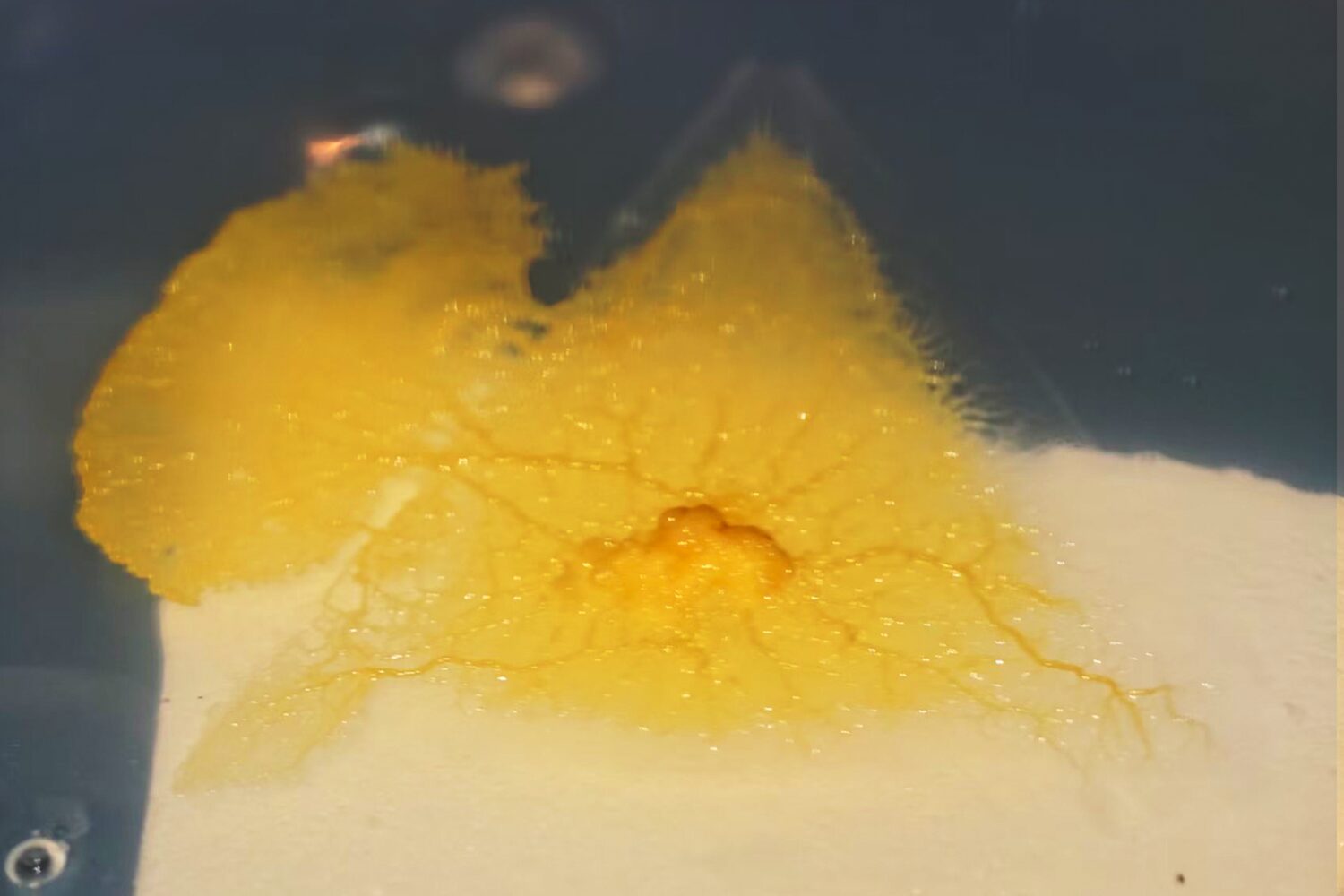
Kexin Wang exhibits as a participating artist in the art exhibition of the Conference on the Bund (Inclusion) in Shanghai, showing “Only Humans Can Coexist” — a living work that asks what it means for people, machines, and other organisms to share one world rather than command it.
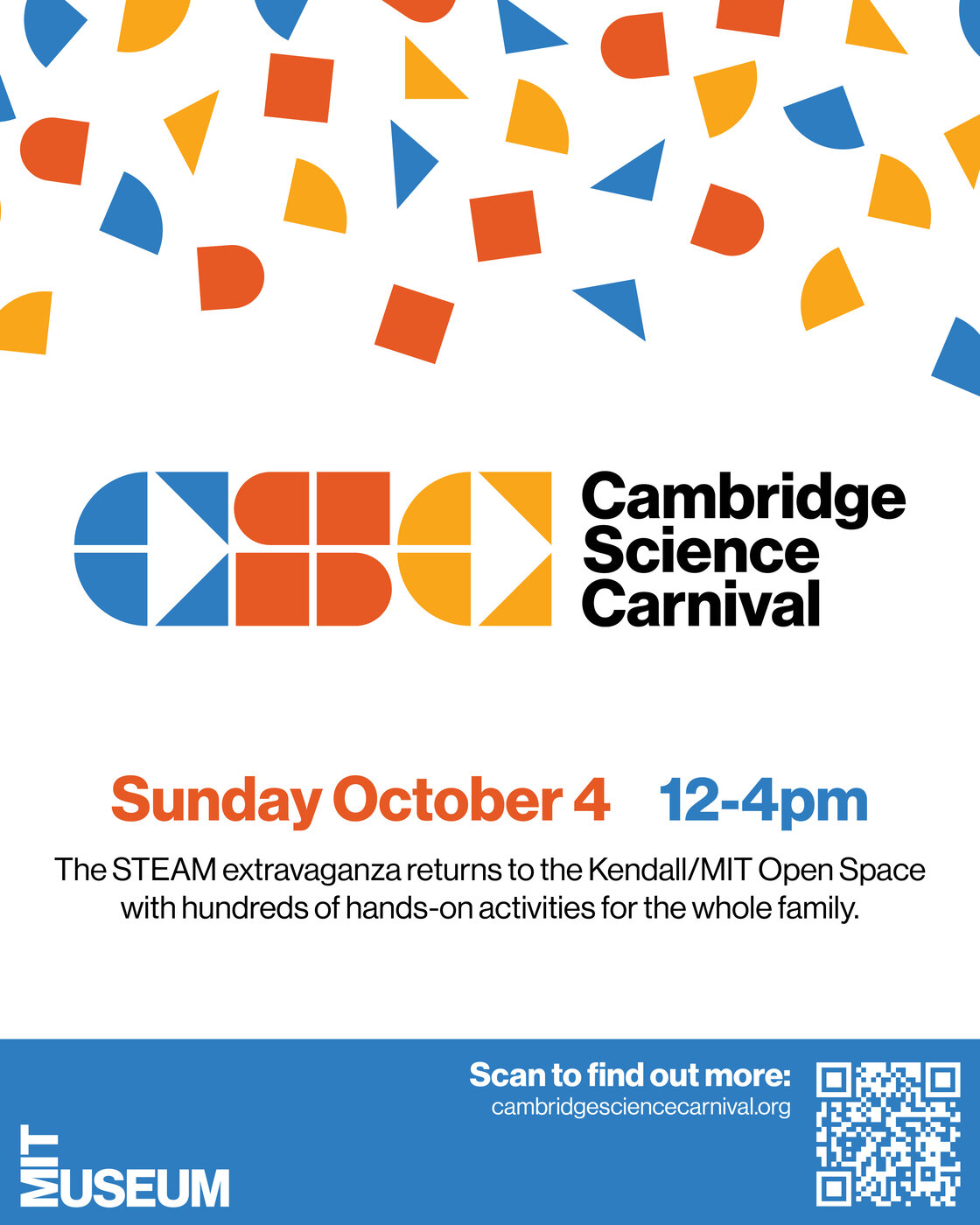
artineer’s bio-art brand funguylab has been selected for MIT Future Fest at the Cambridge Science Carnival — the STEAM extravaganza at the Kendall/MIT Open Space, with hundreds of hands-on activities for the whole family. Find our booth — Grow with the Glow — and come grow living art with us. Free and open to all.
Made bio-art with funguylab’s light-printing technology? Send it to us before September 15 and we’ll exhibit your work at the carnival — shown to 20,000+ visitors.
More talks, workshops, and hackathons are in the works. Subscribe for email reminders, or follow us on Instagram for the latest announcements.
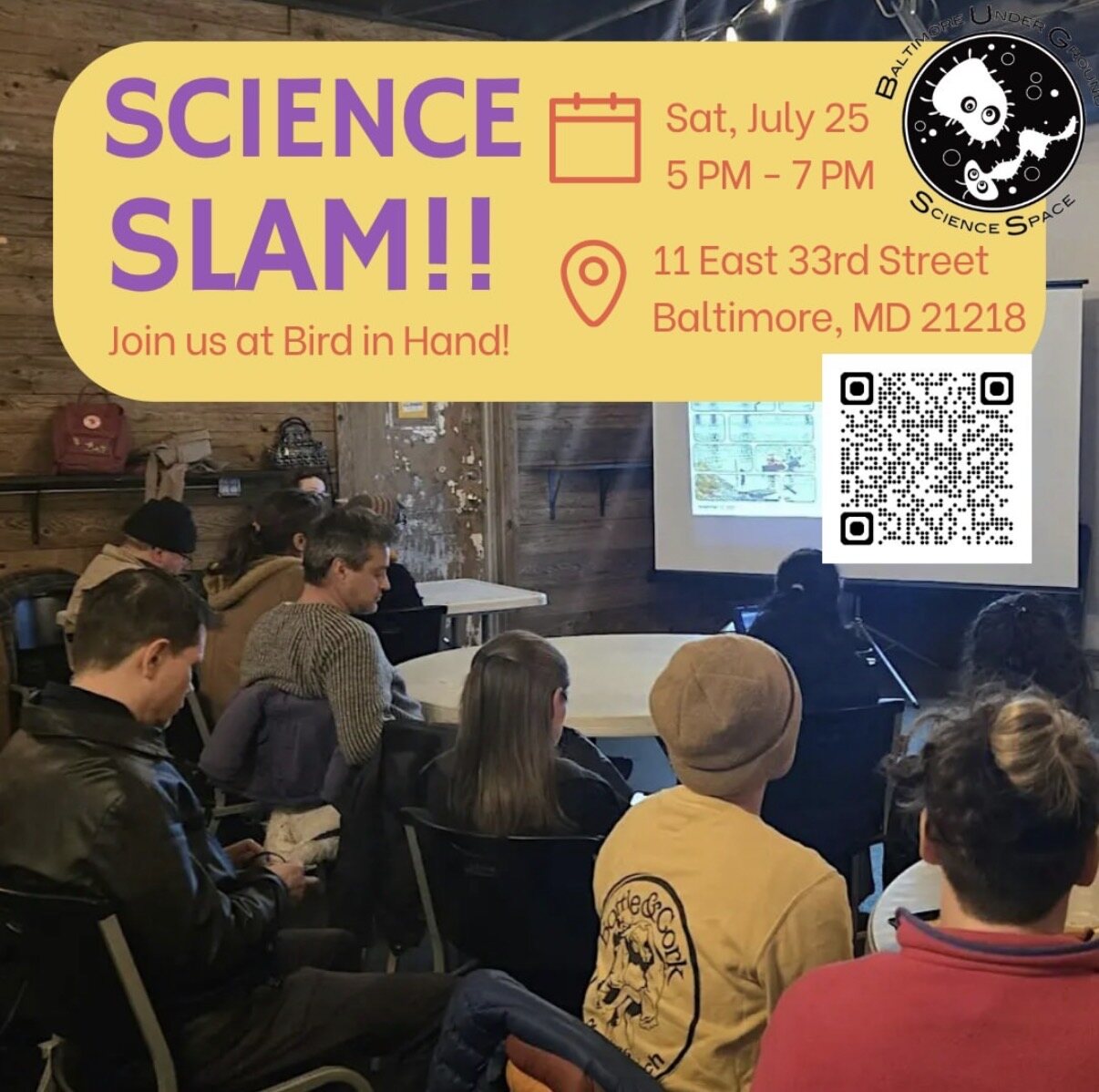
artineer’s bio-art brand funguylab shared its work at Science Slam, hosted by BUGSS (Baltimore Underground Science Space) — walking through our latest work: light-guided growth of Mucor, extending the method to slime moulds, and early progress toward slime-mould circuits — living, conductive bio-circuits.
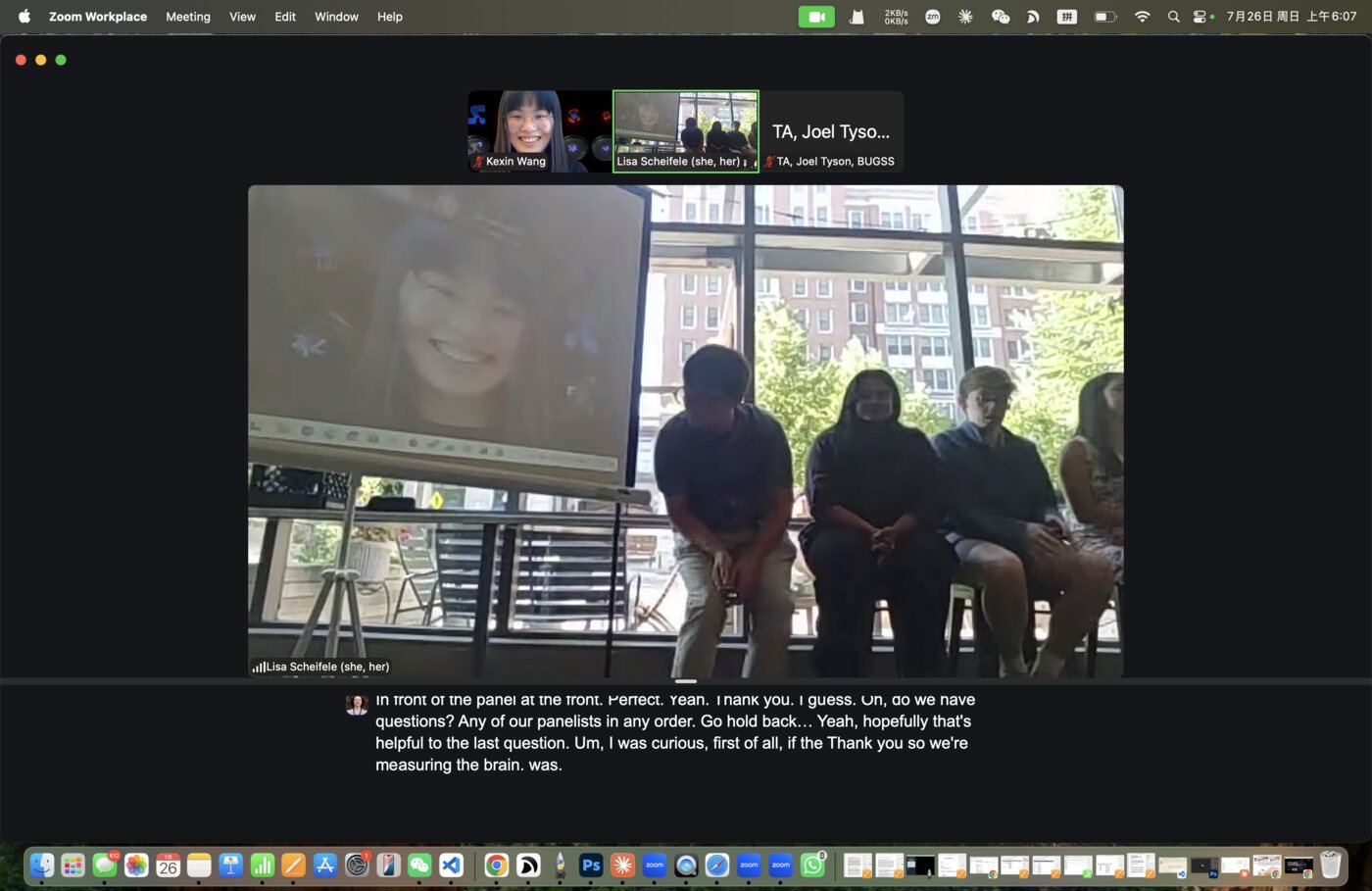
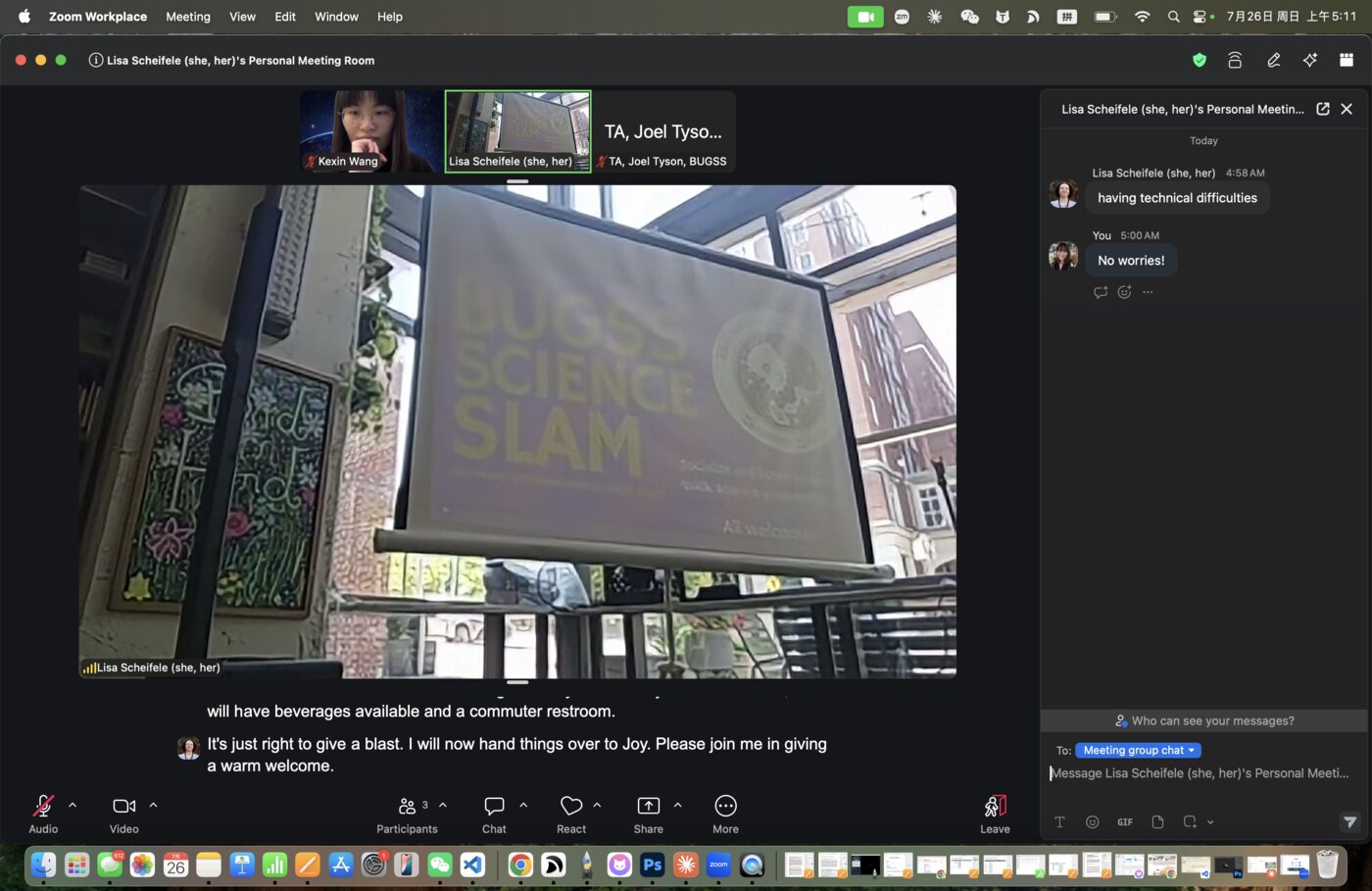
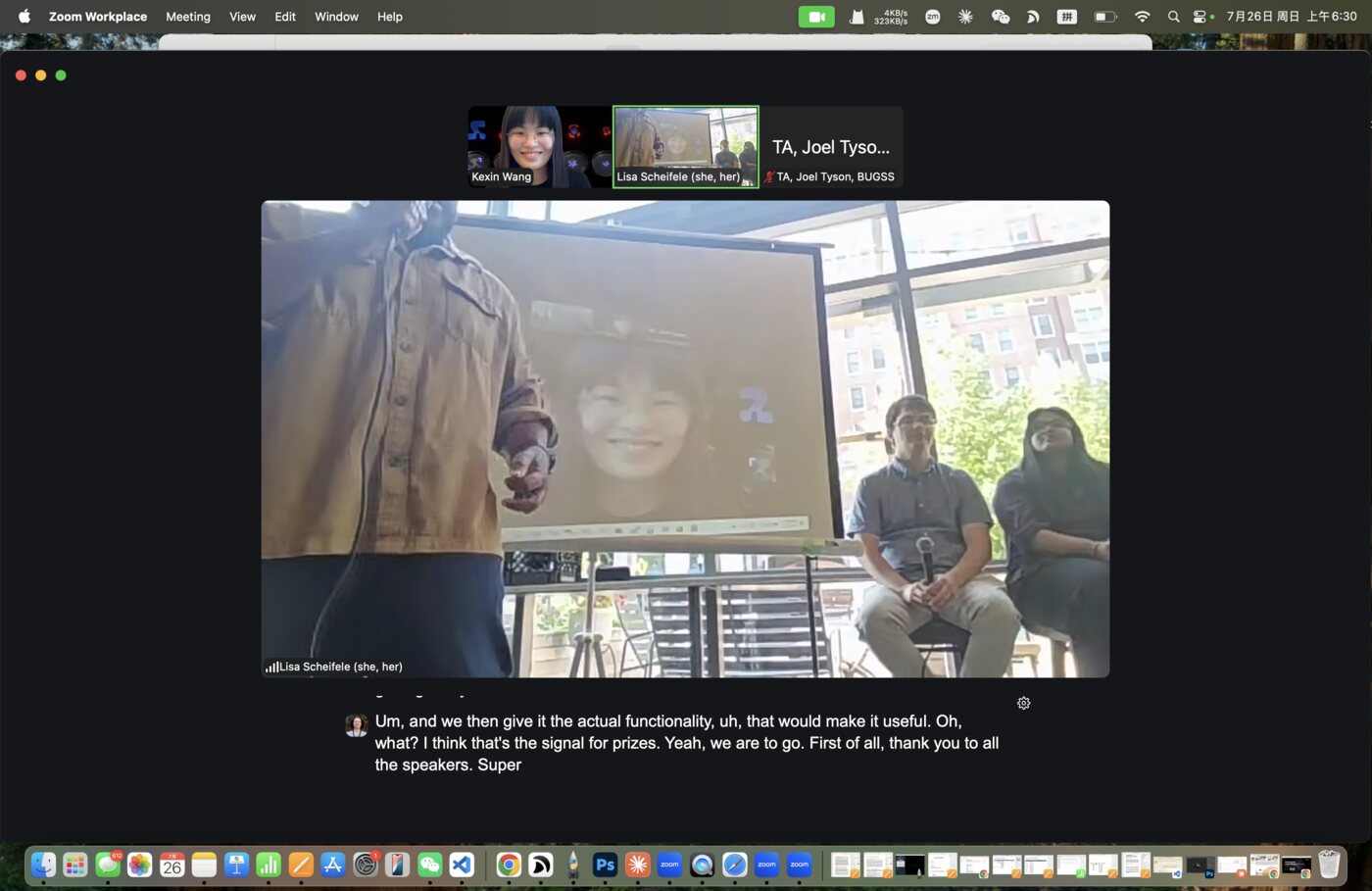
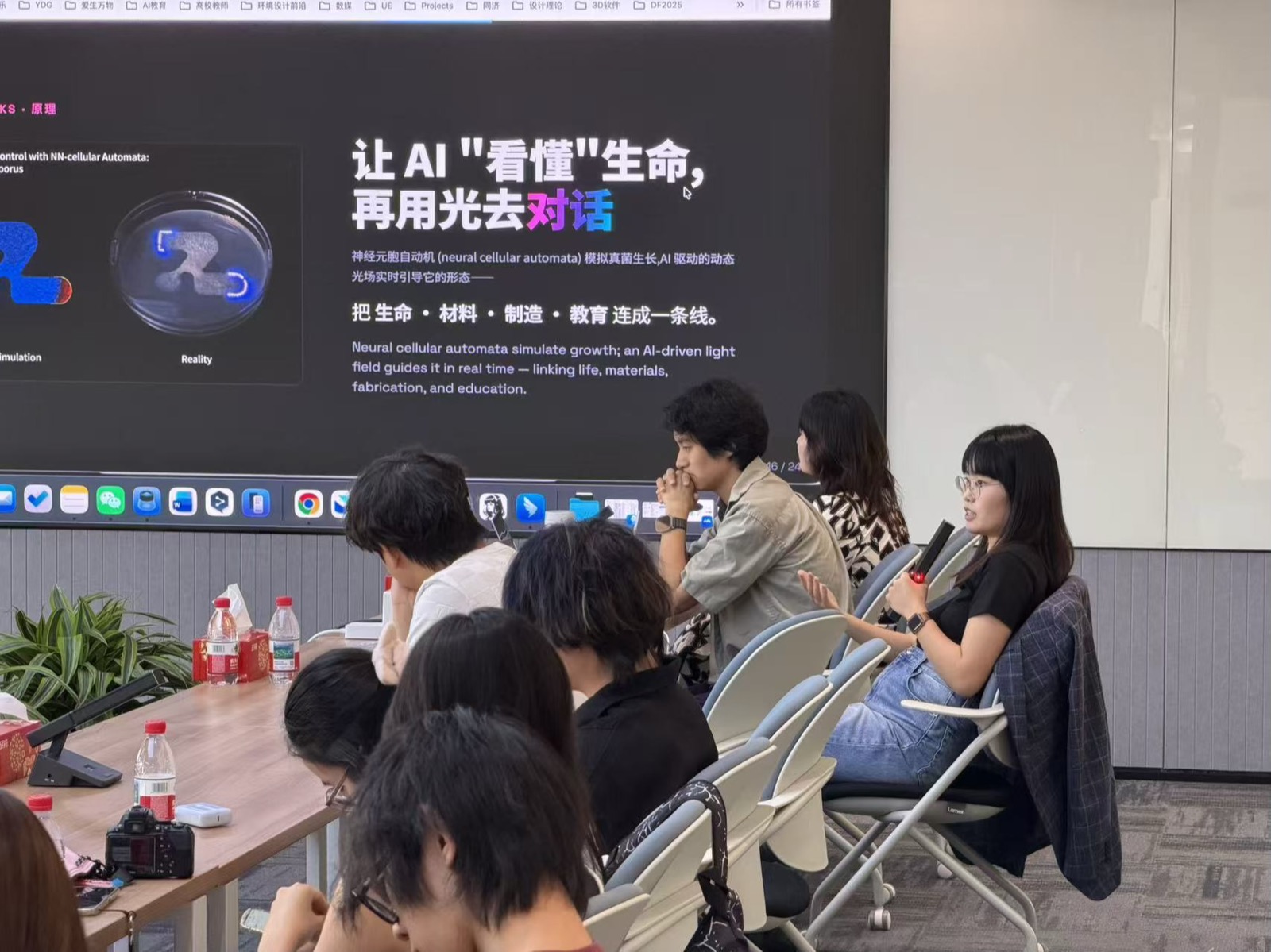
During the 2026 World AI Conference, artineer researcher Kexin Wang joined a four-hour gathering on the future of AI hosted by MANA — with artineer and Funguylab among the event's sponsors. Her talk, When Algorithms Begin to Cultivate: making, education, and living bio-art in the age of AI, presented Cultigen — artineer's AI curriculum engine — alongside the Mycelian / Funguylab bio-art work, turning frontier research into living, teachable creation. The day paired talks with live showcases of generative art, AI imaging, and immersive installations across venues in Shanghai and Nanjing.
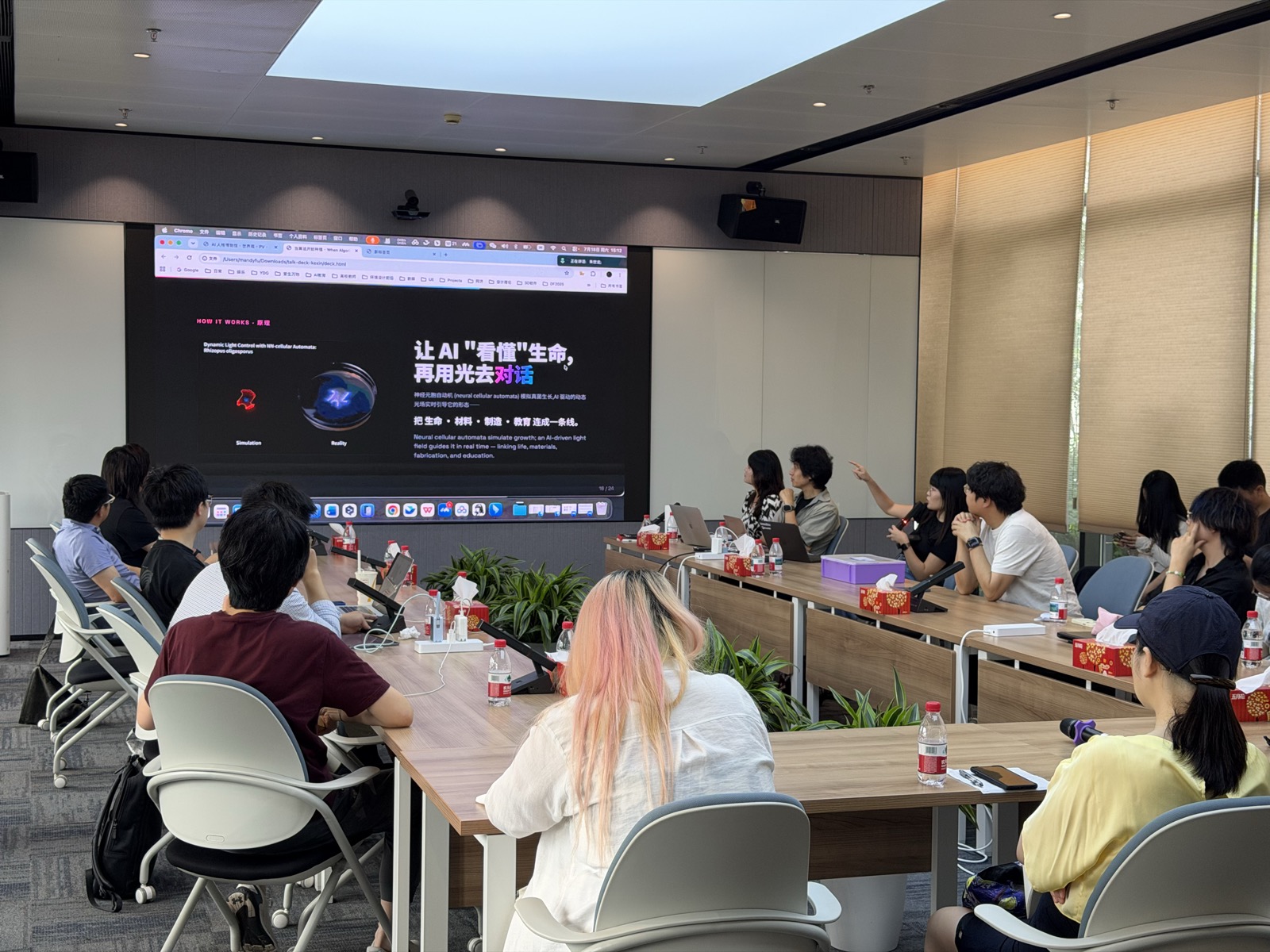
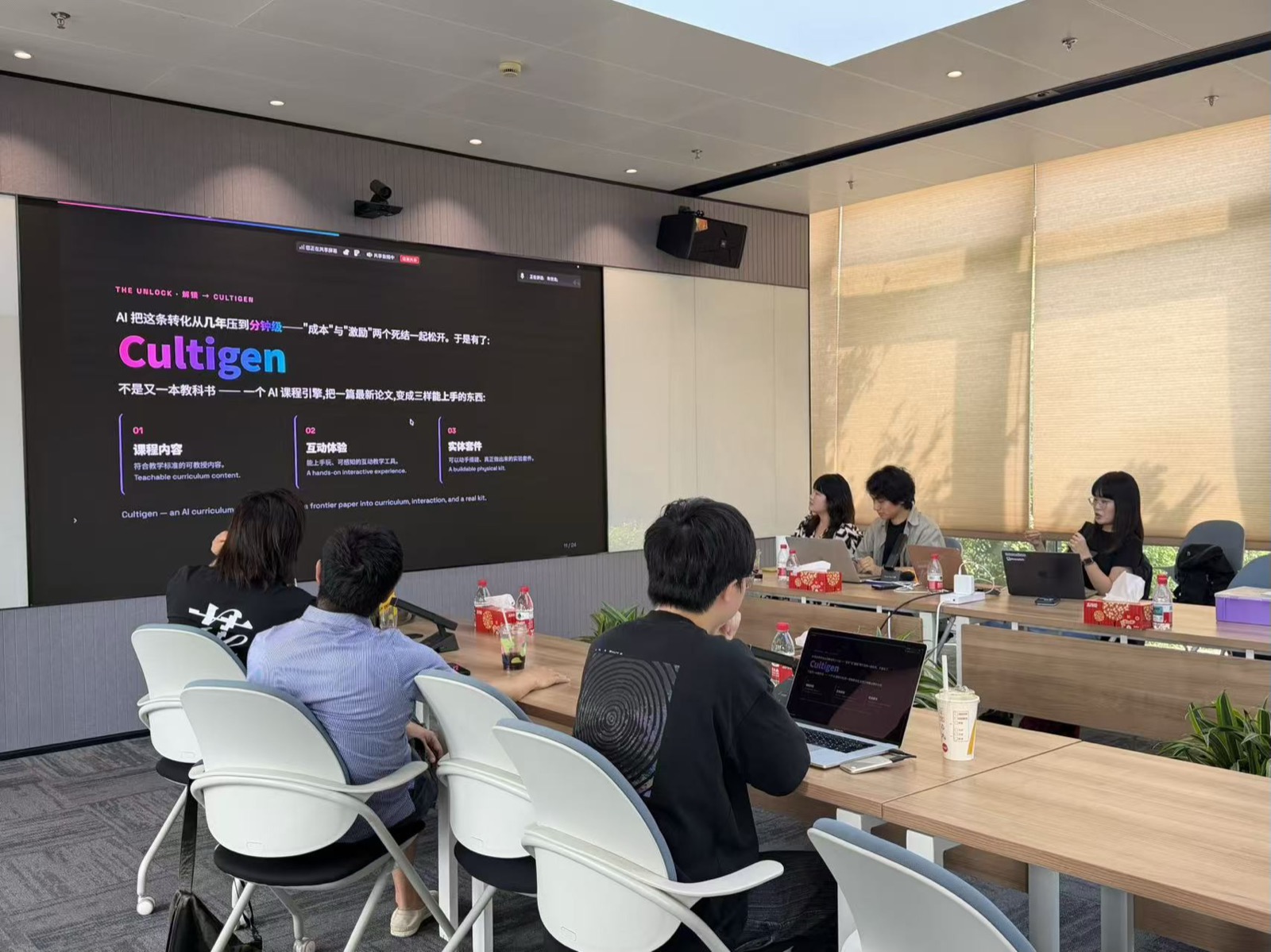
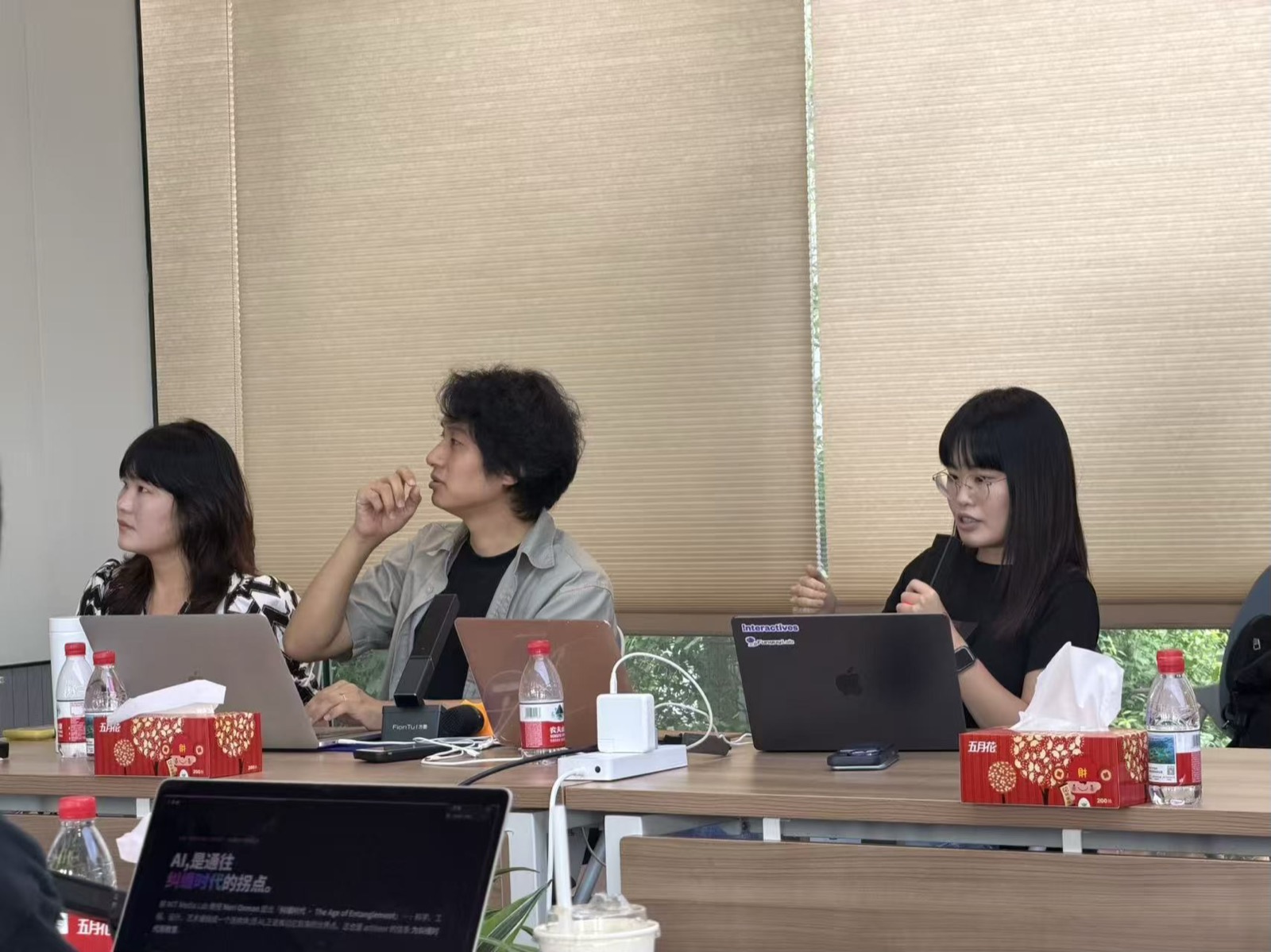
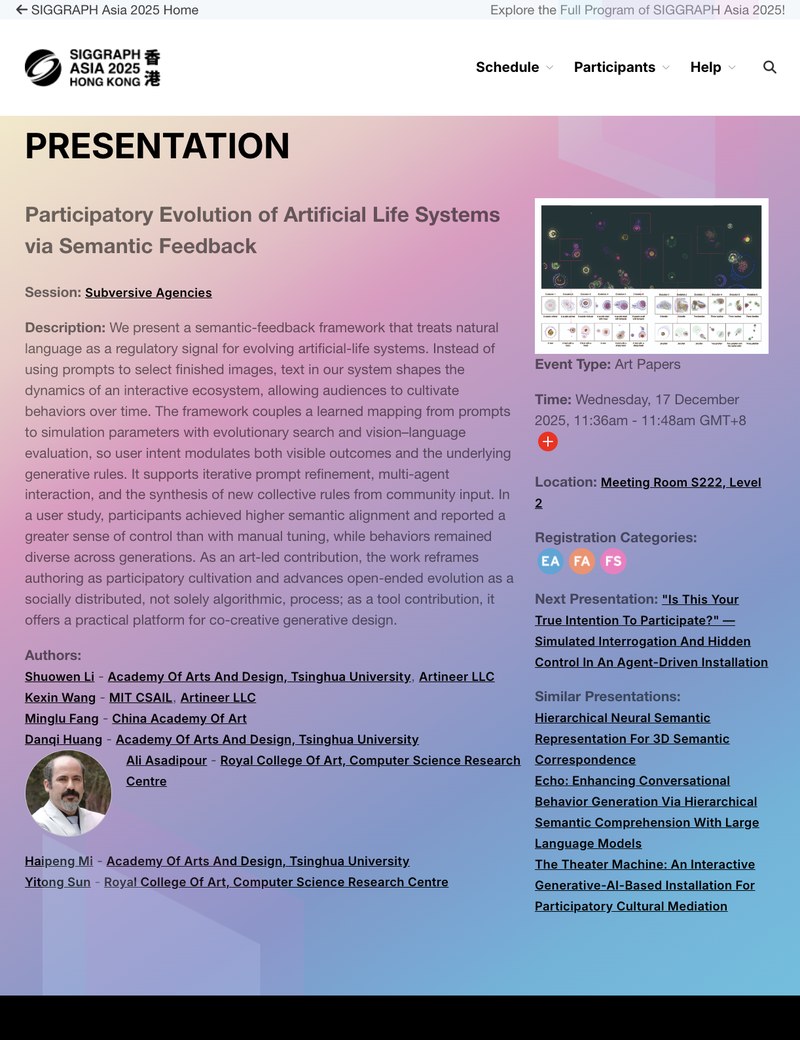
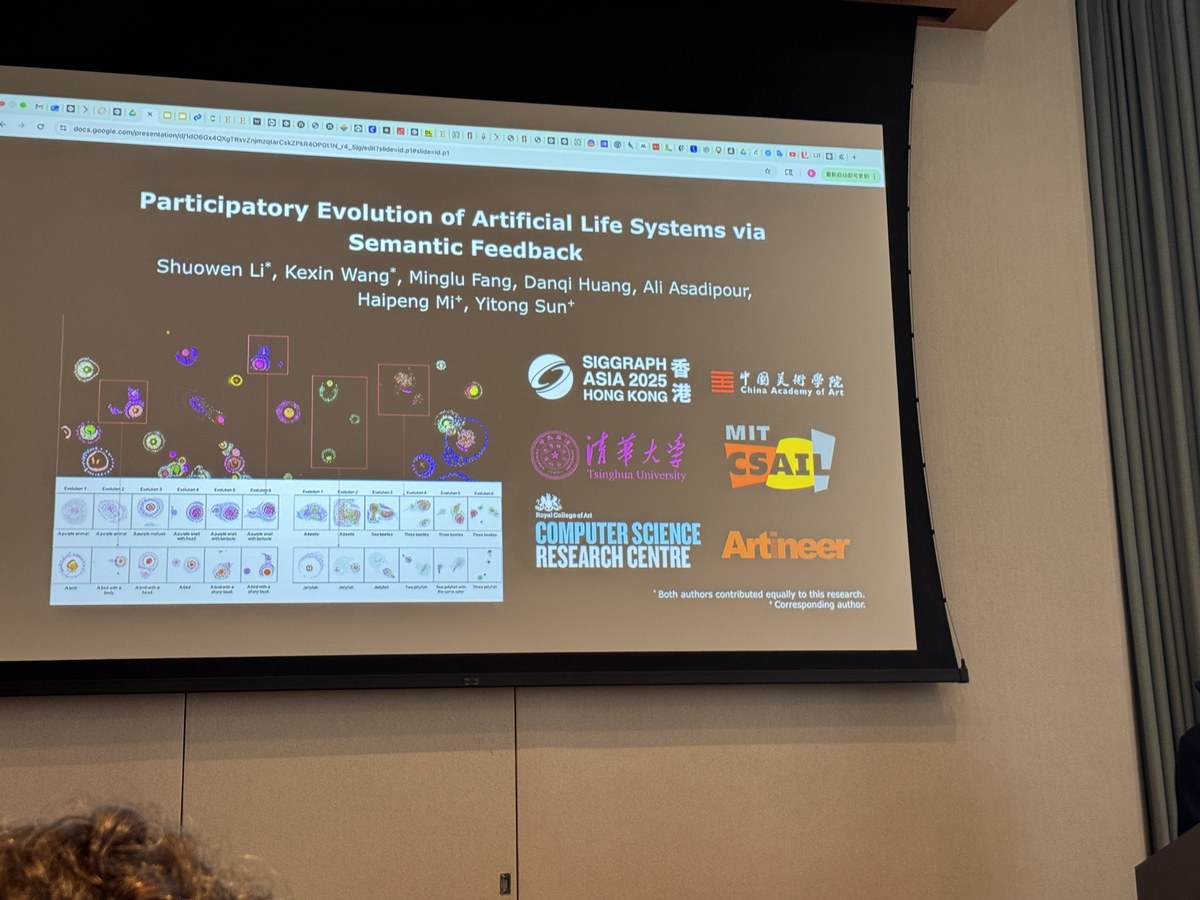
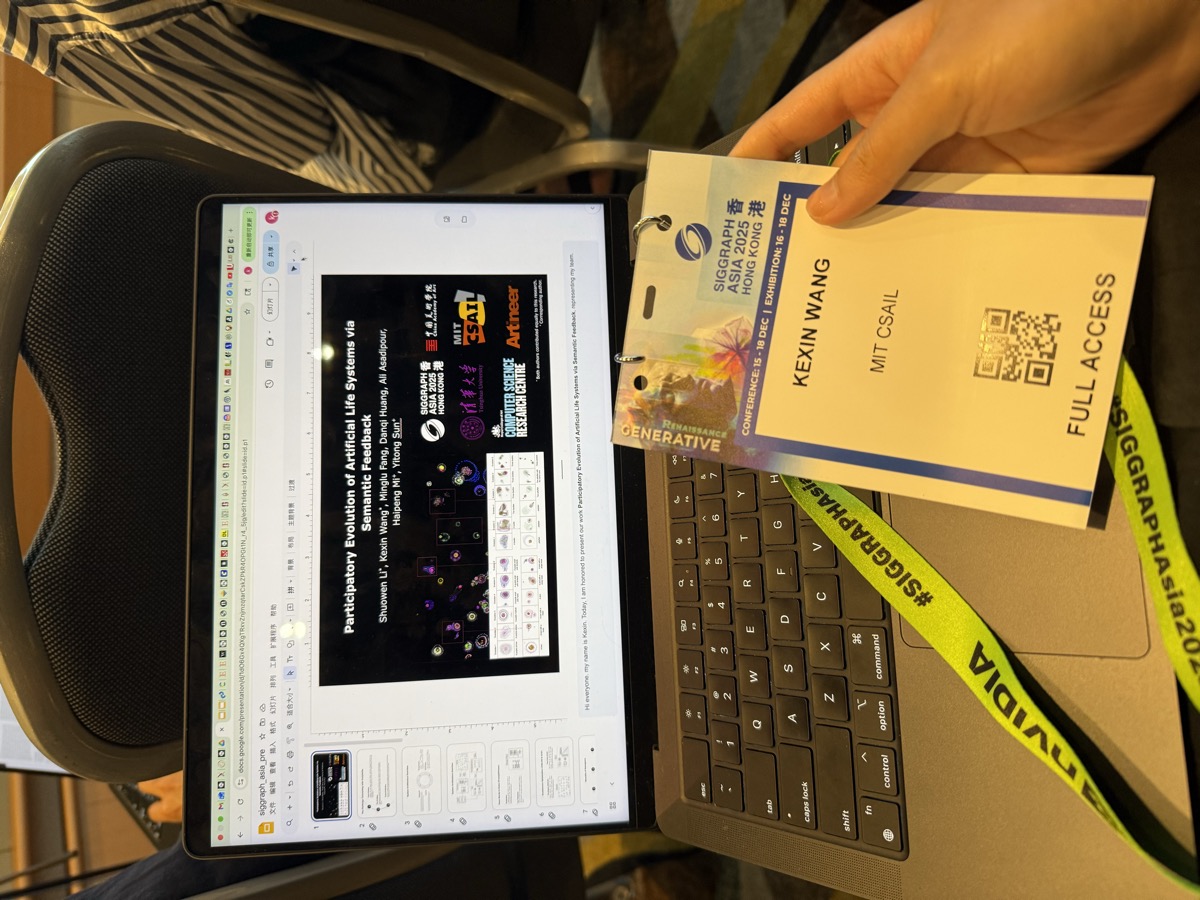
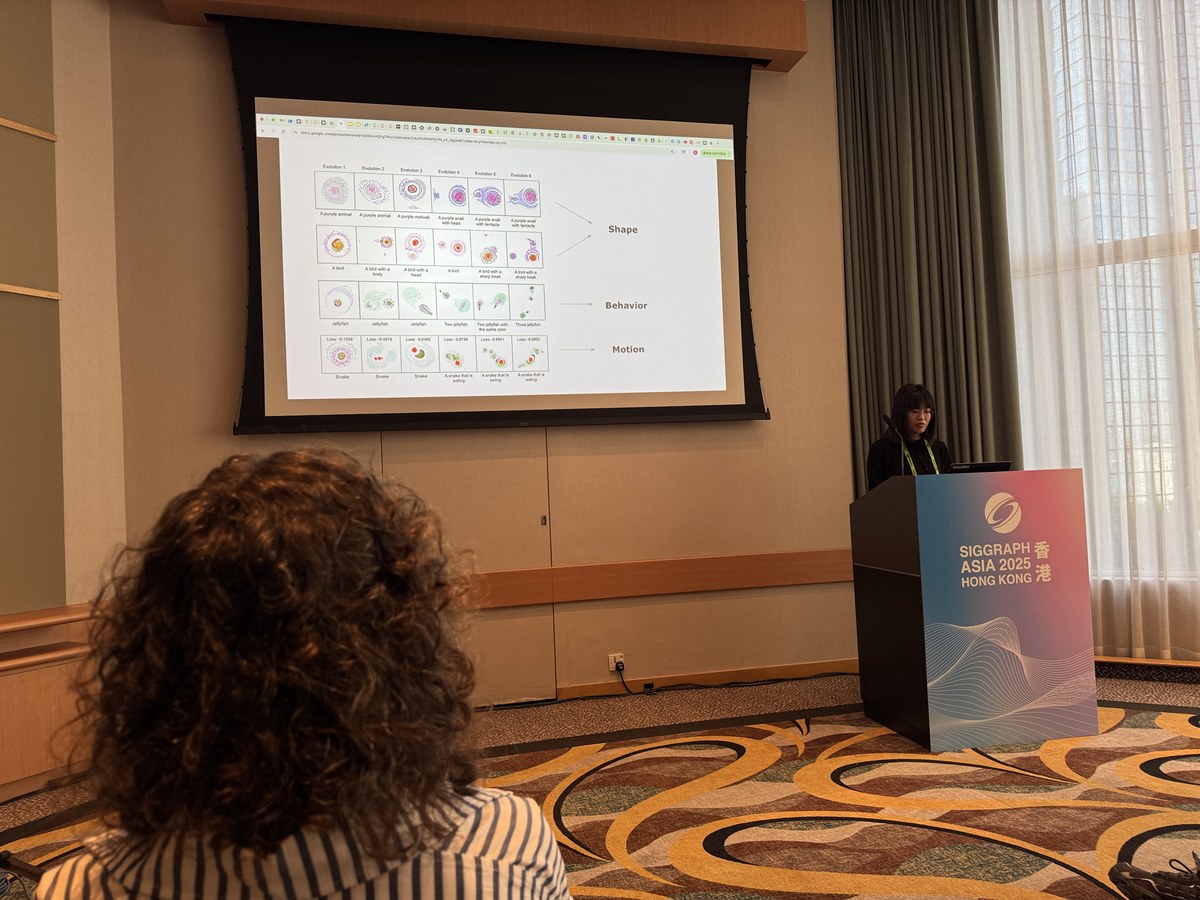
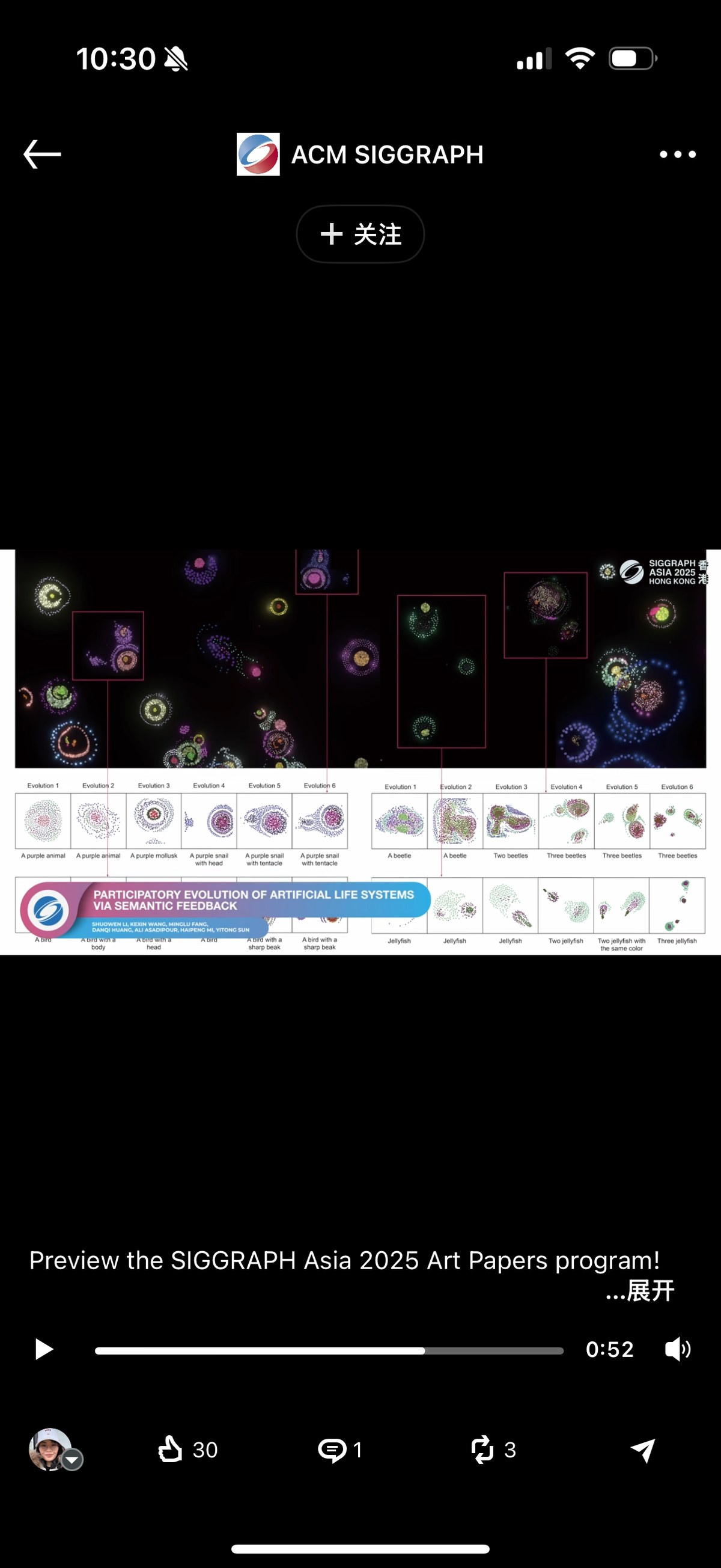
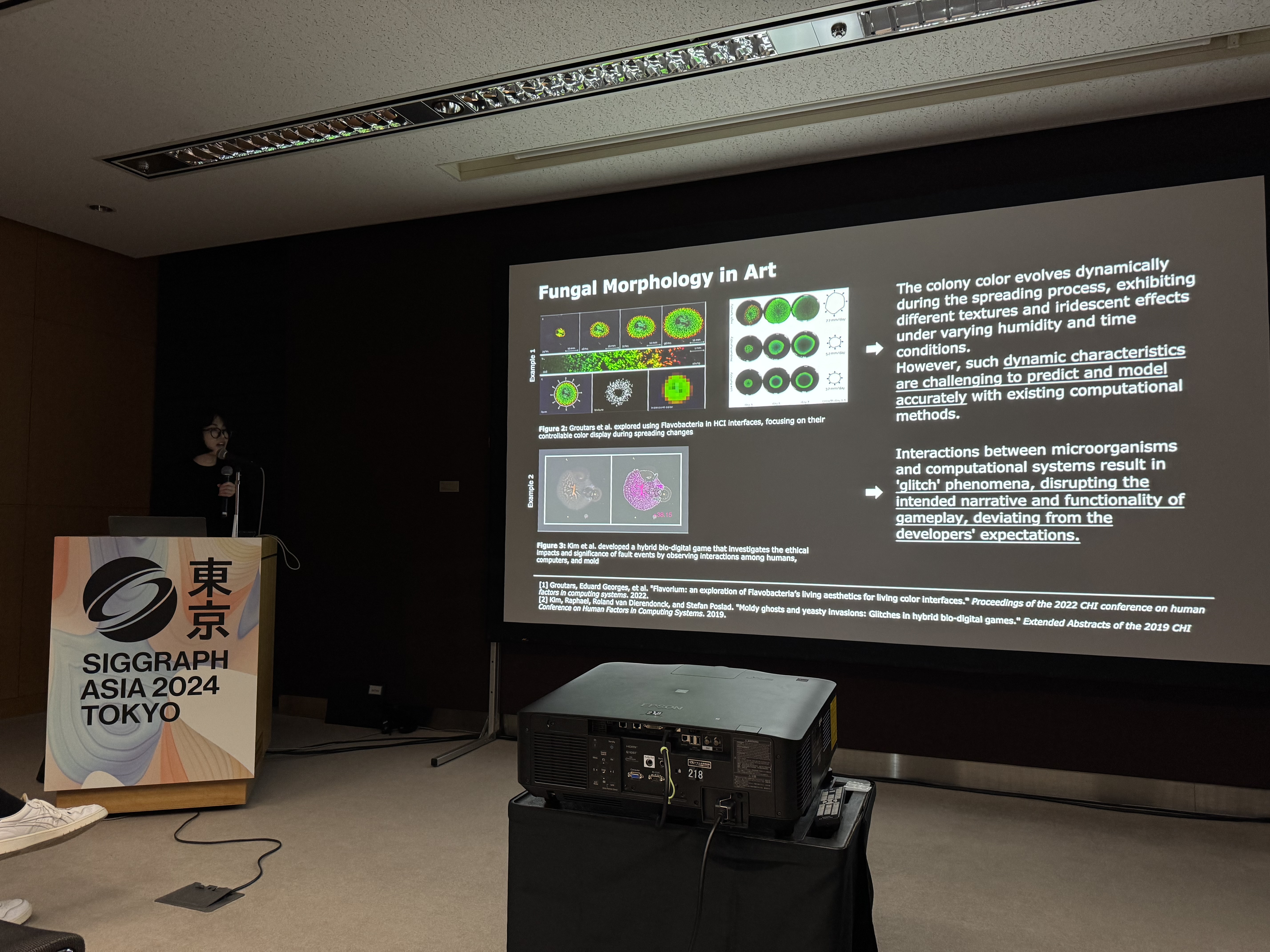
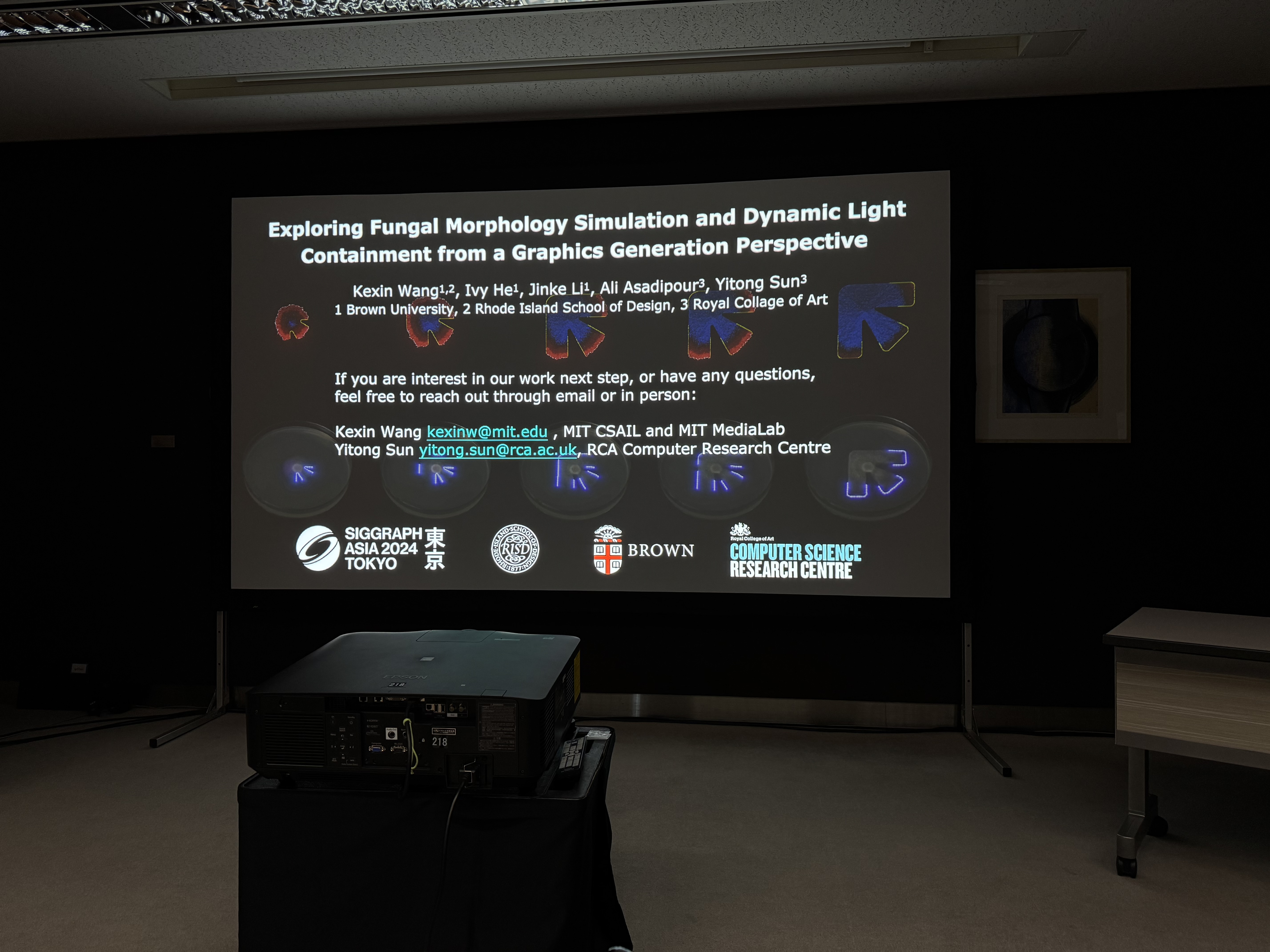
artineer's research was accepted and presented at SIGGRAPH Asia 2025 Art Papers in Tokyo — one of the most selective venues for art and technology research. The work explores how artificial life can be designed as active ecological participants rather than simulations, proposing a new framework for embodied AI agents that engage with living systems. The talk was delivered by researcher Kexin Wang; artineer's Research & Development Senior Advisor Yitong Sun also attended the conference, and paper co-authors Shuowen Li and Minglu Fang — both students of the artineer school — contributed to the work.
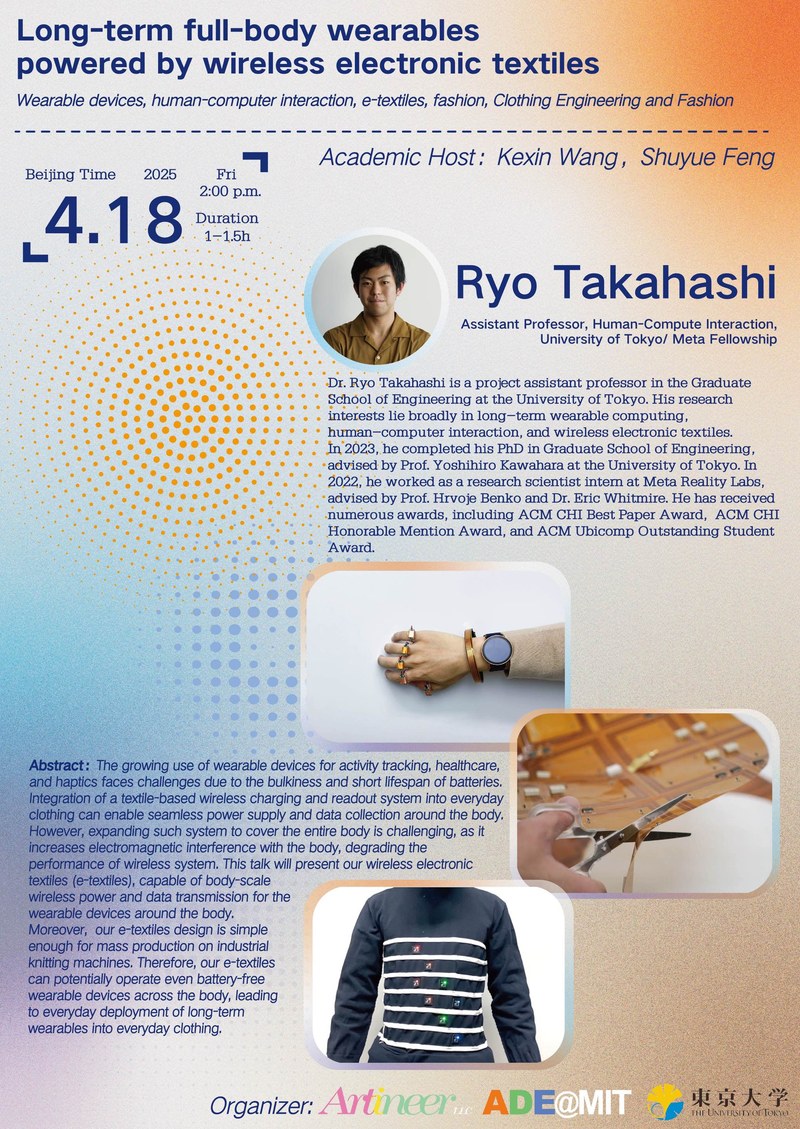
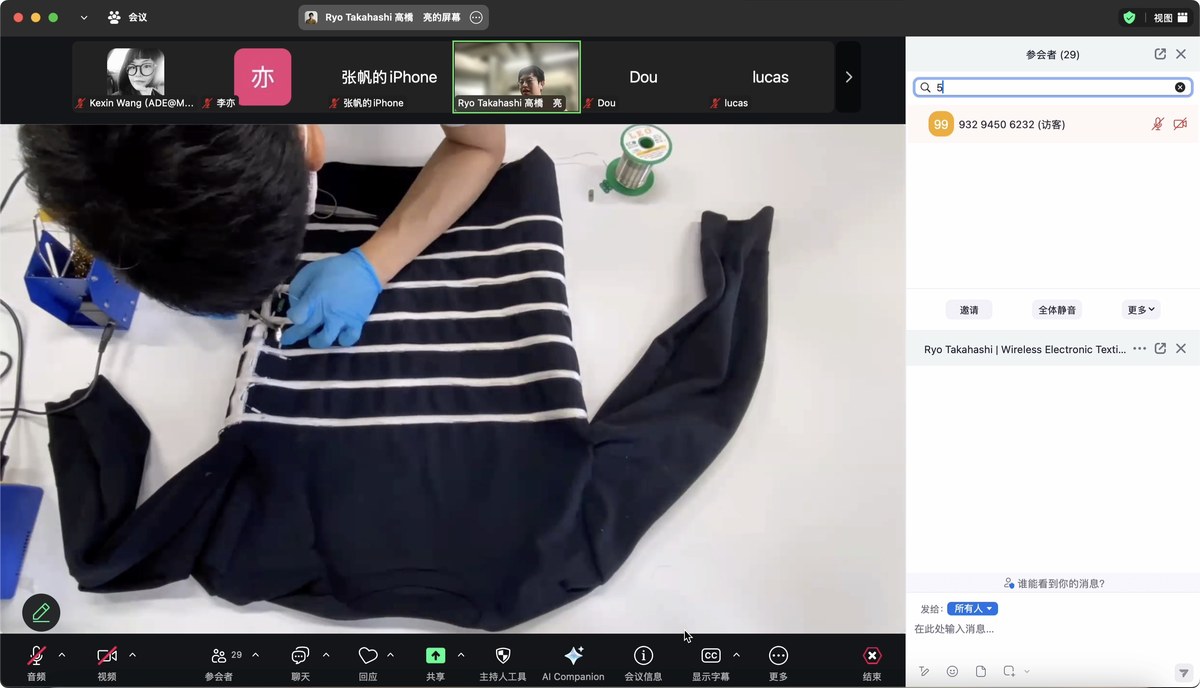
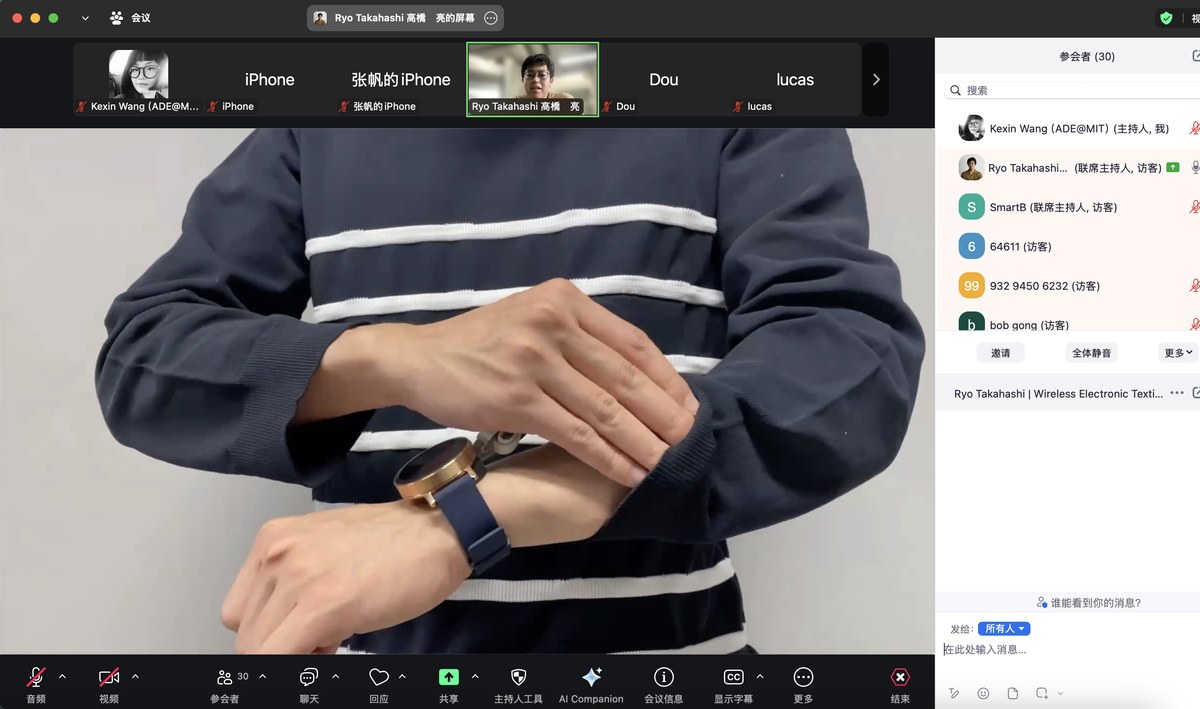
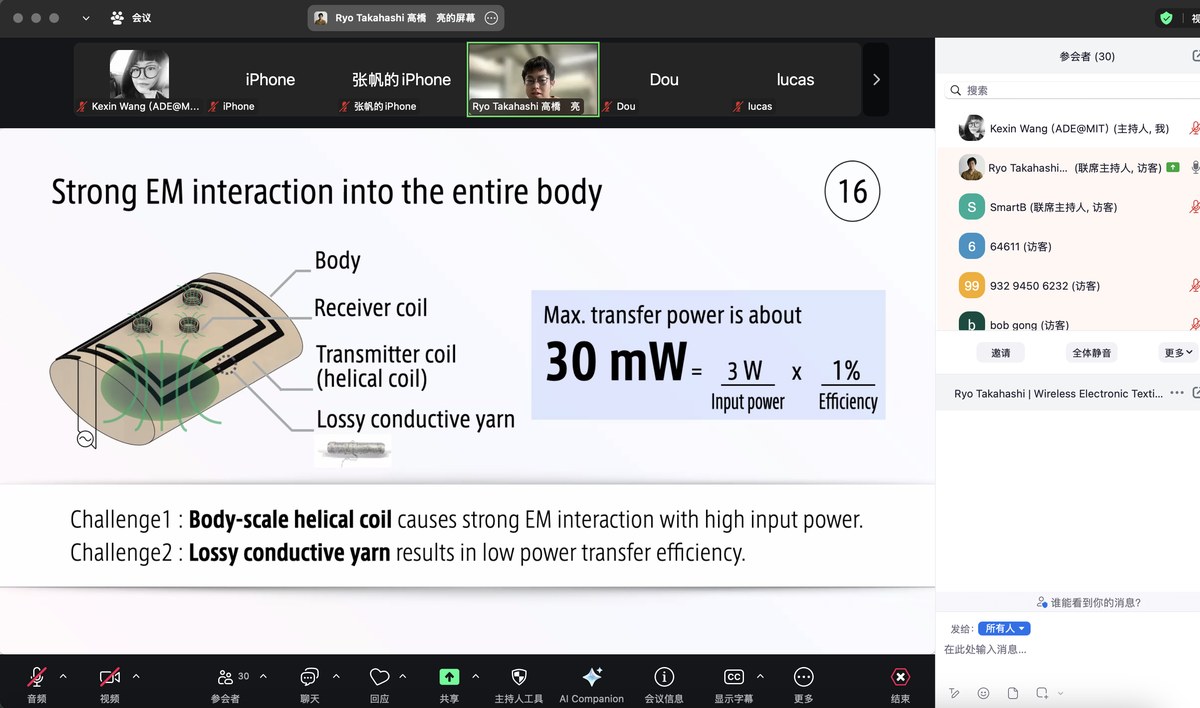
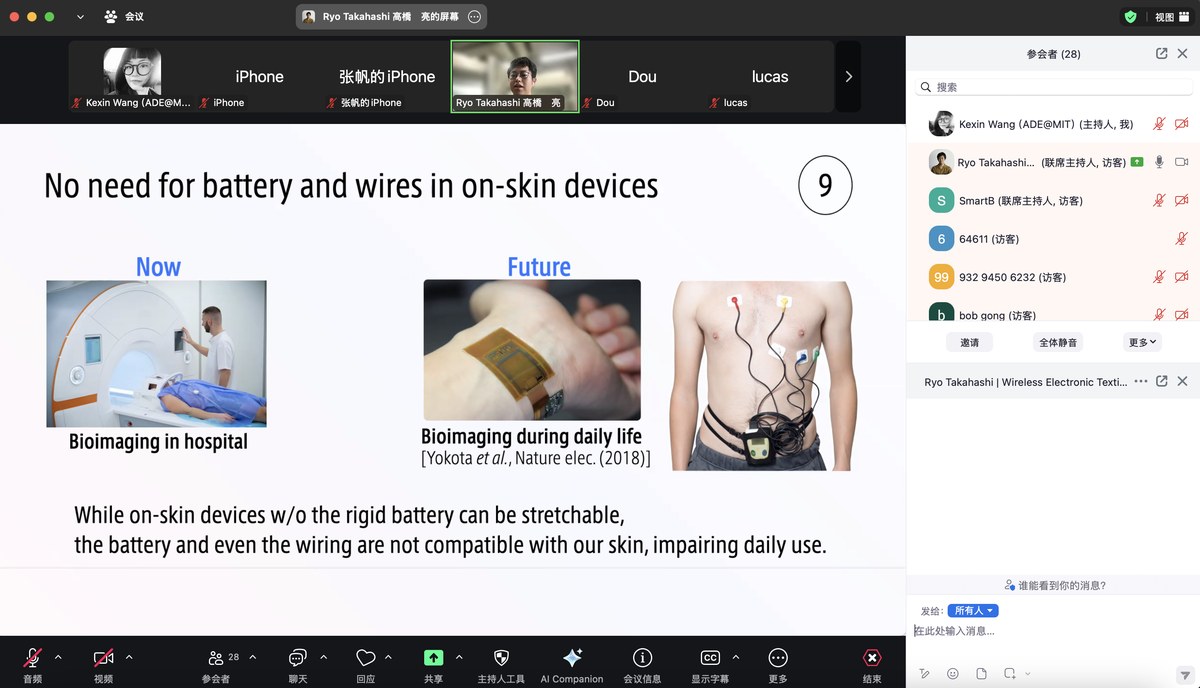
Dr. Ryo Takahashi — Assistant Professor at the University of Tokyo and Meta Research Fellow — presented his team's work on body-scale textile-based systems for long-term wearable computing: full-body coverage, seamless integration into everyday clothing, and battery-free operation through wireless power transfer. Hosted by Kexin Wang and Shuyue Feng. Co-organized by artineer, ADE@MIT, and the University of Tokyo.
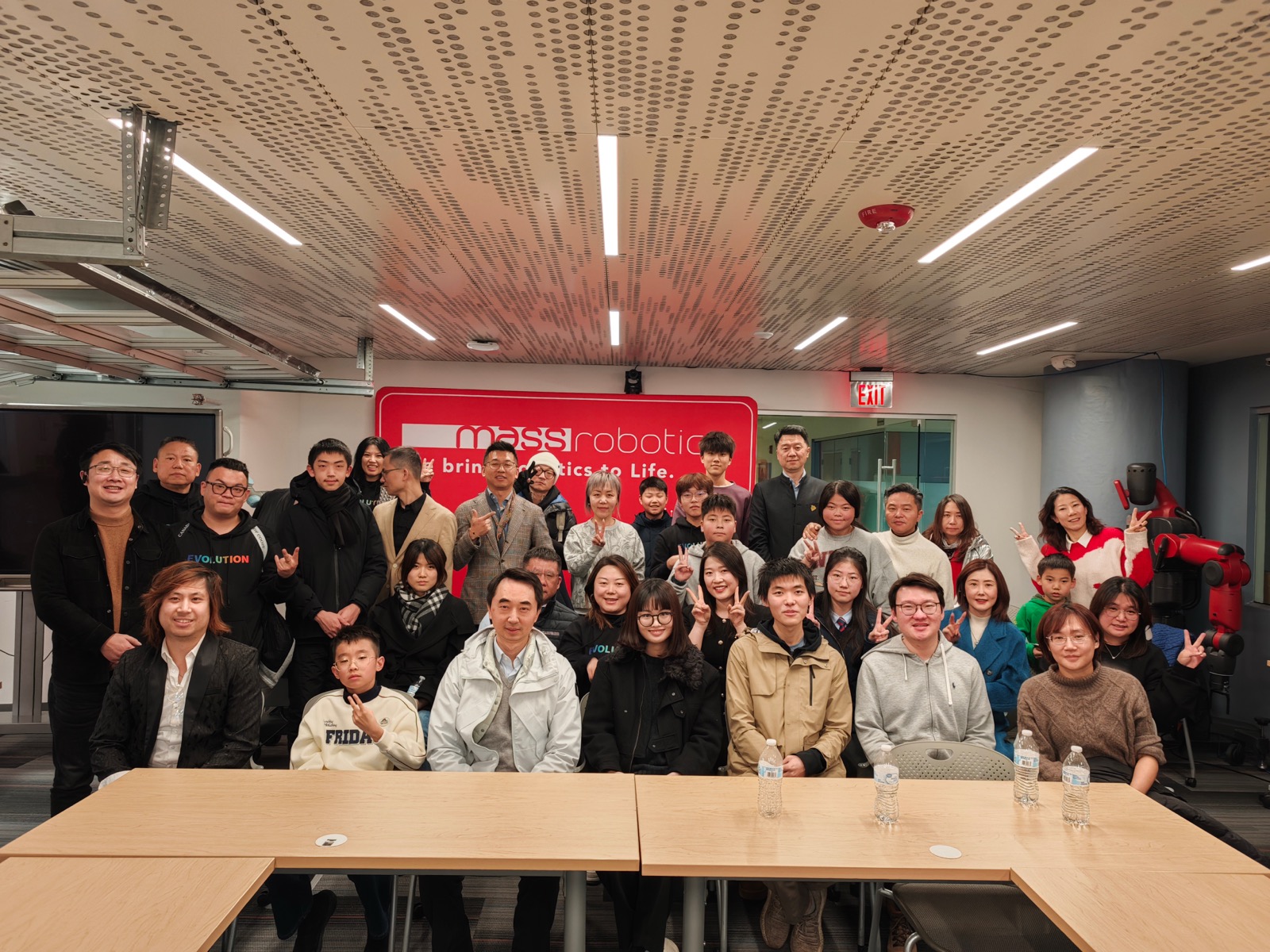
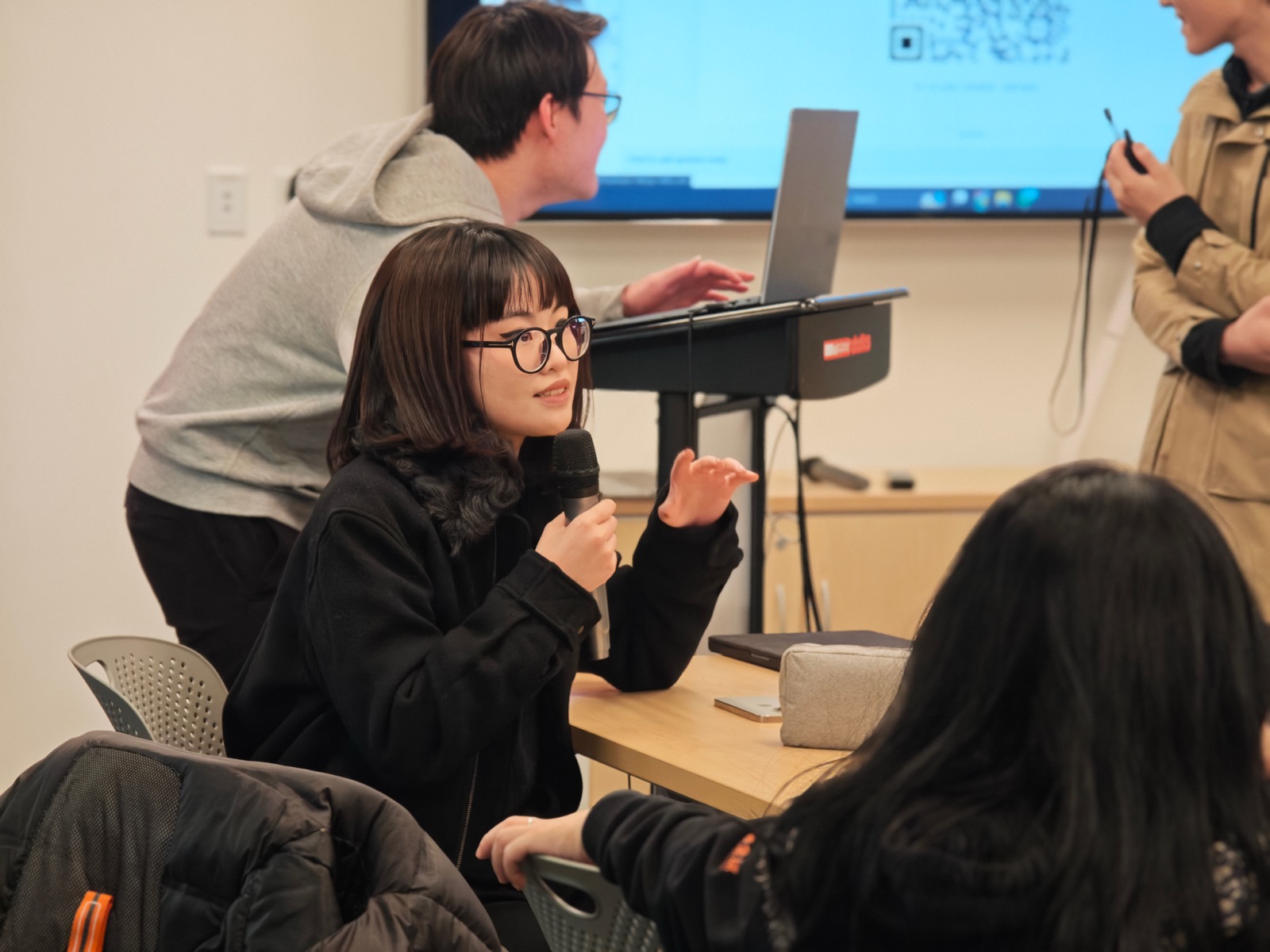
Kexin Wang, alongside researchers from MIT's Center for Bits and Atoms, gave a featured talk at MassRobotics — Boston's leading innovation hub for robotics and AI. The session gathered entrepreneurs, investors, and technologists from China and the U.S. to discuss emerging opportunities in AI, robotics, and smart manufacturing, and the broader landscape of U.S.–China cross-border collaboration. Co-organized with MIT CBA and ADE@MIT.
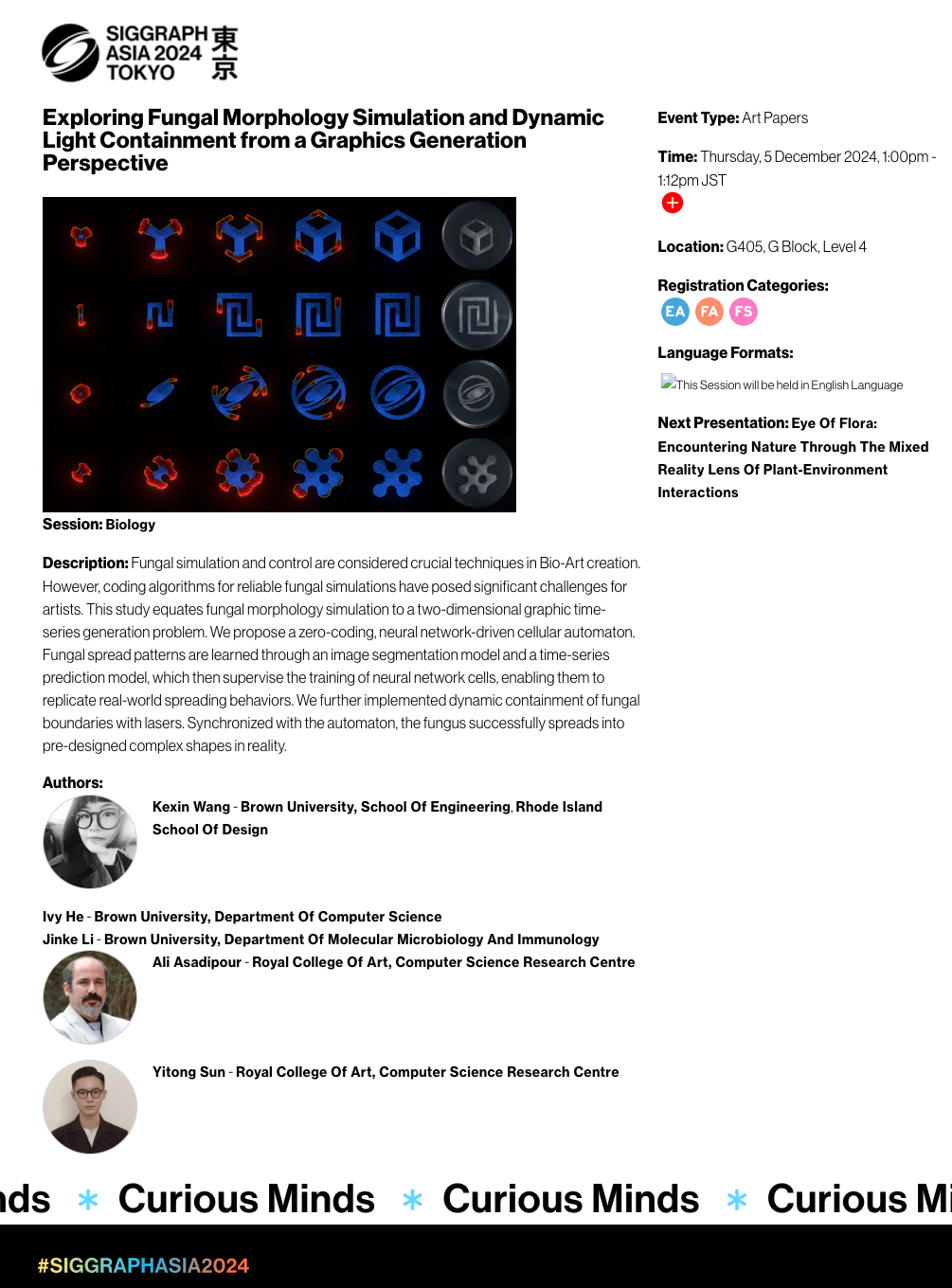
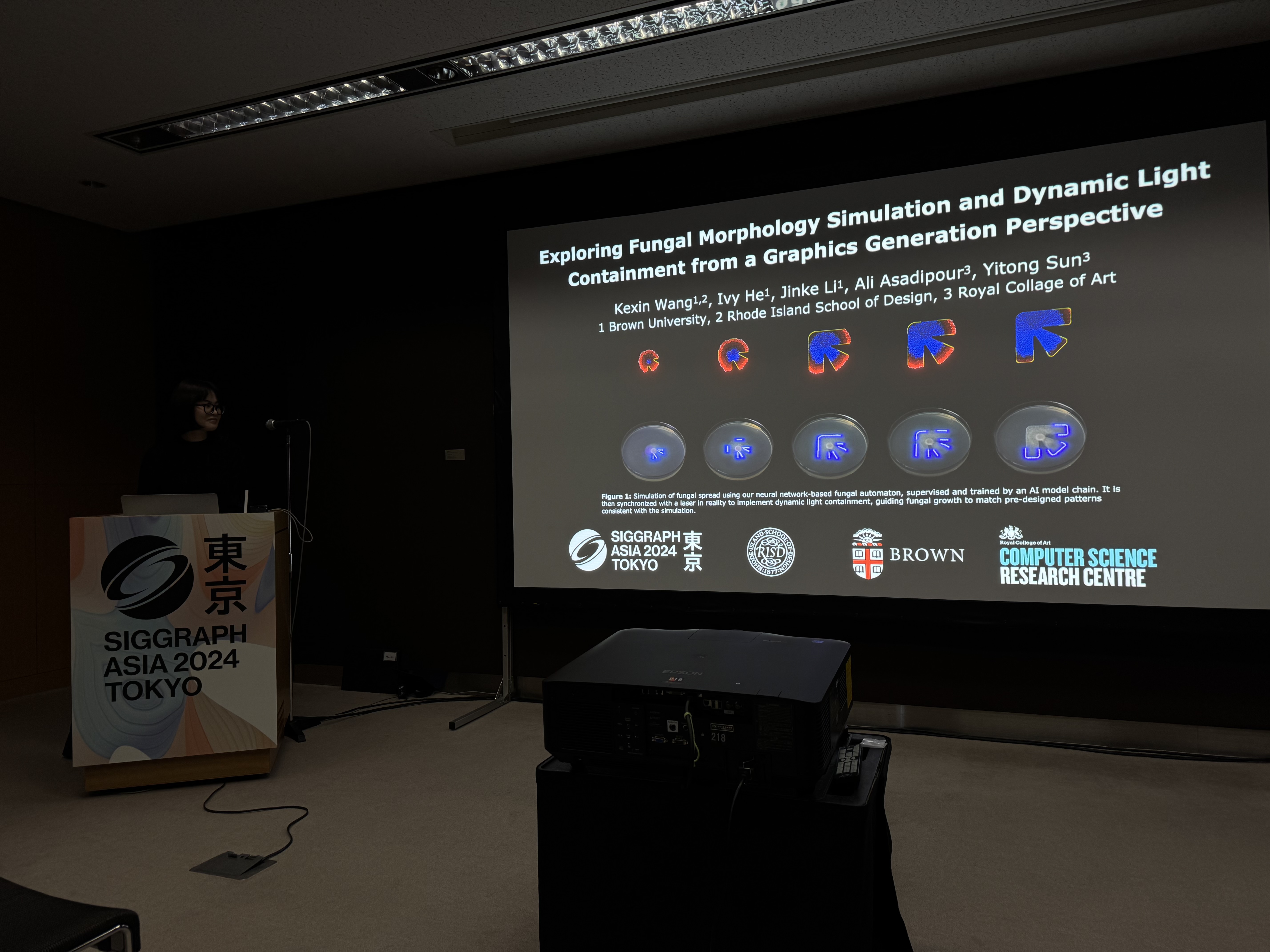
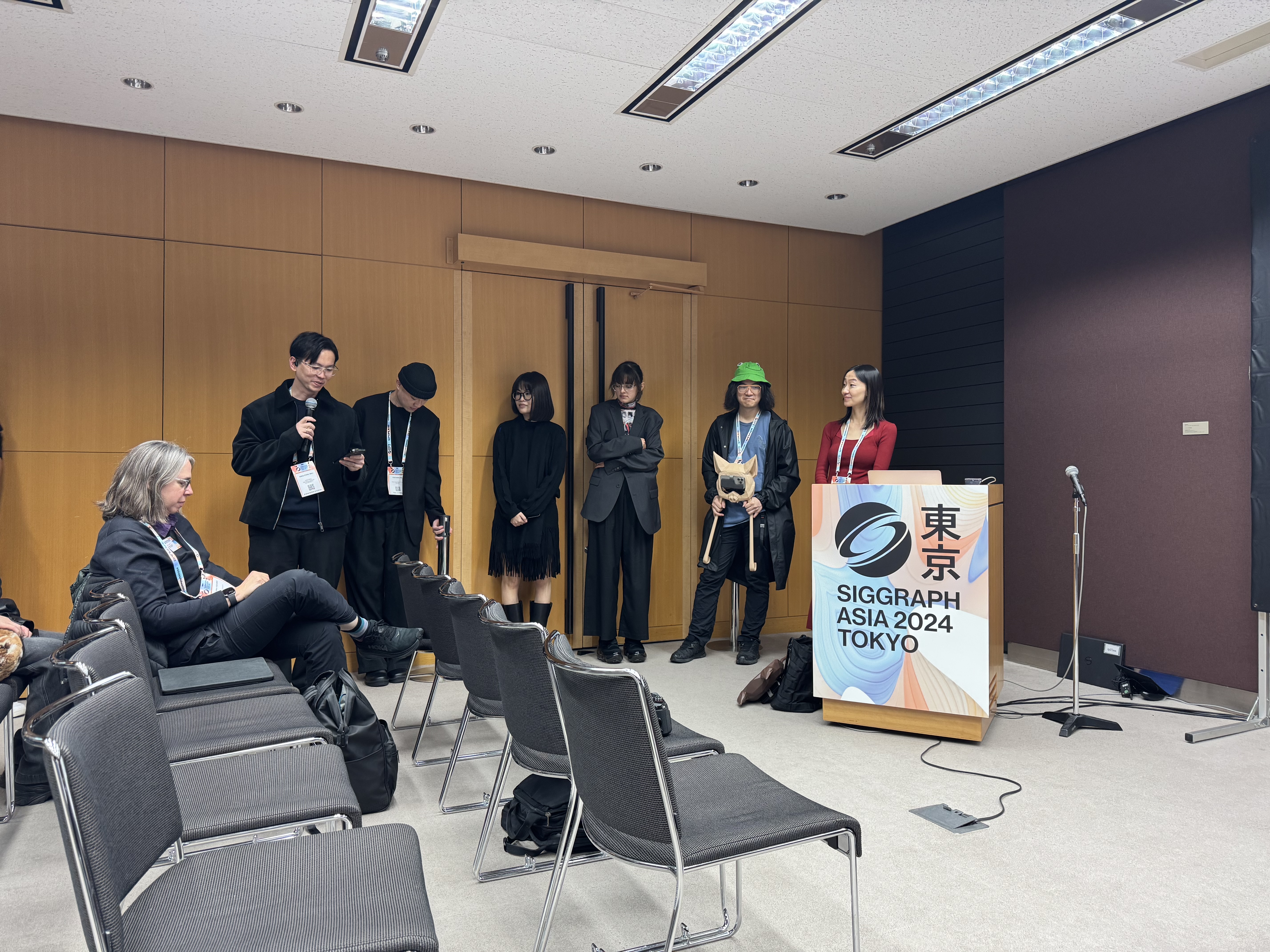
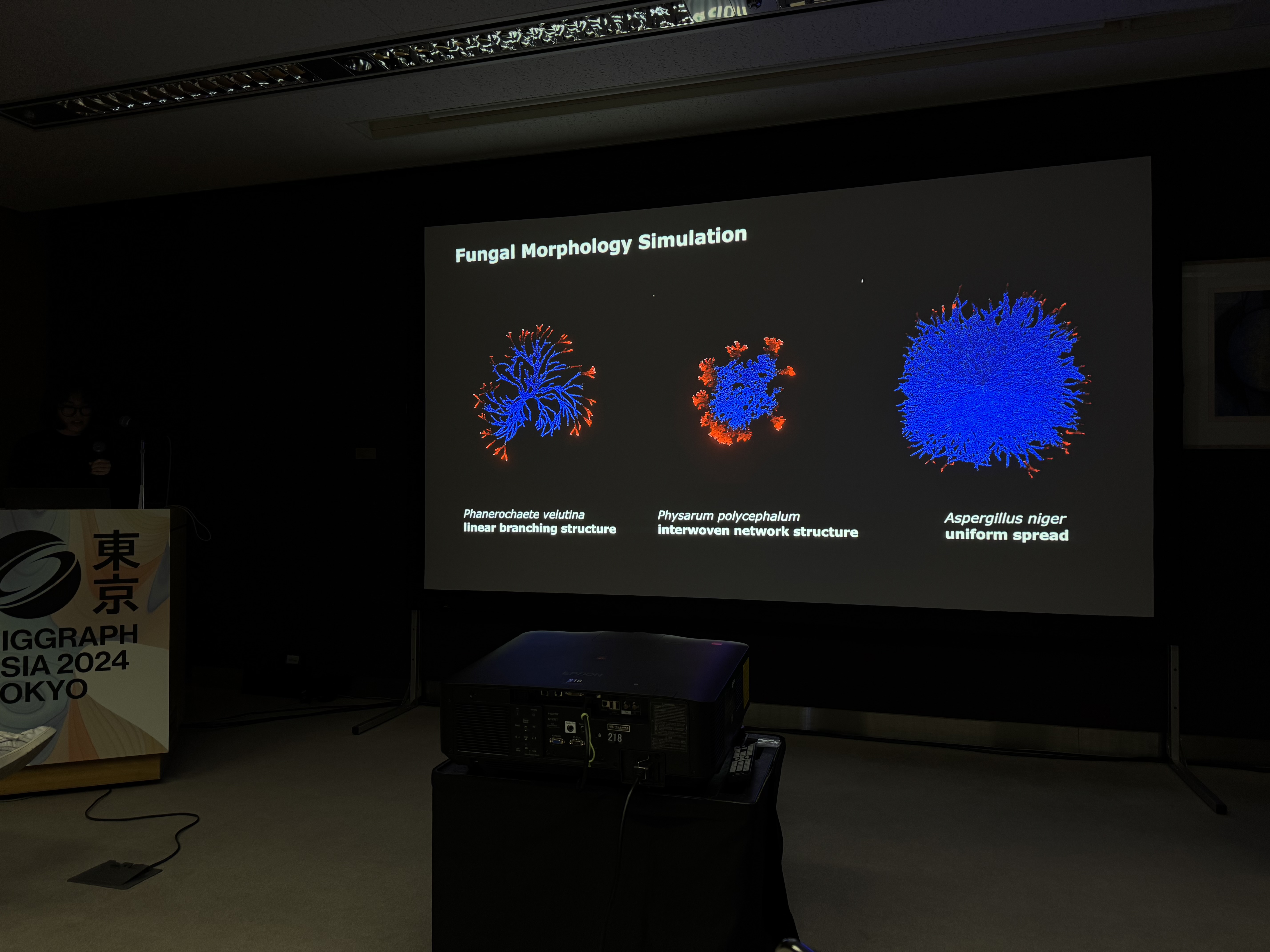
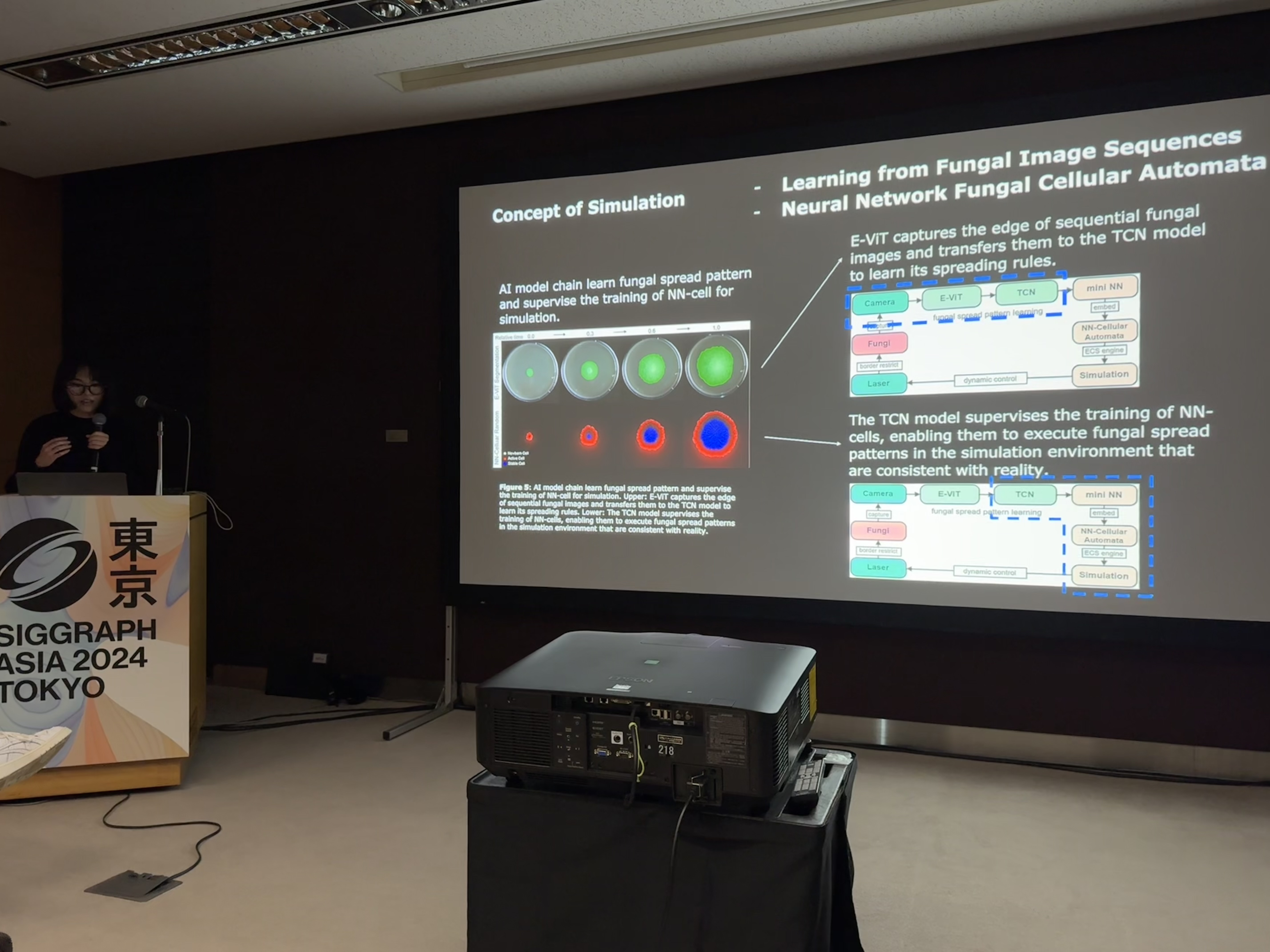
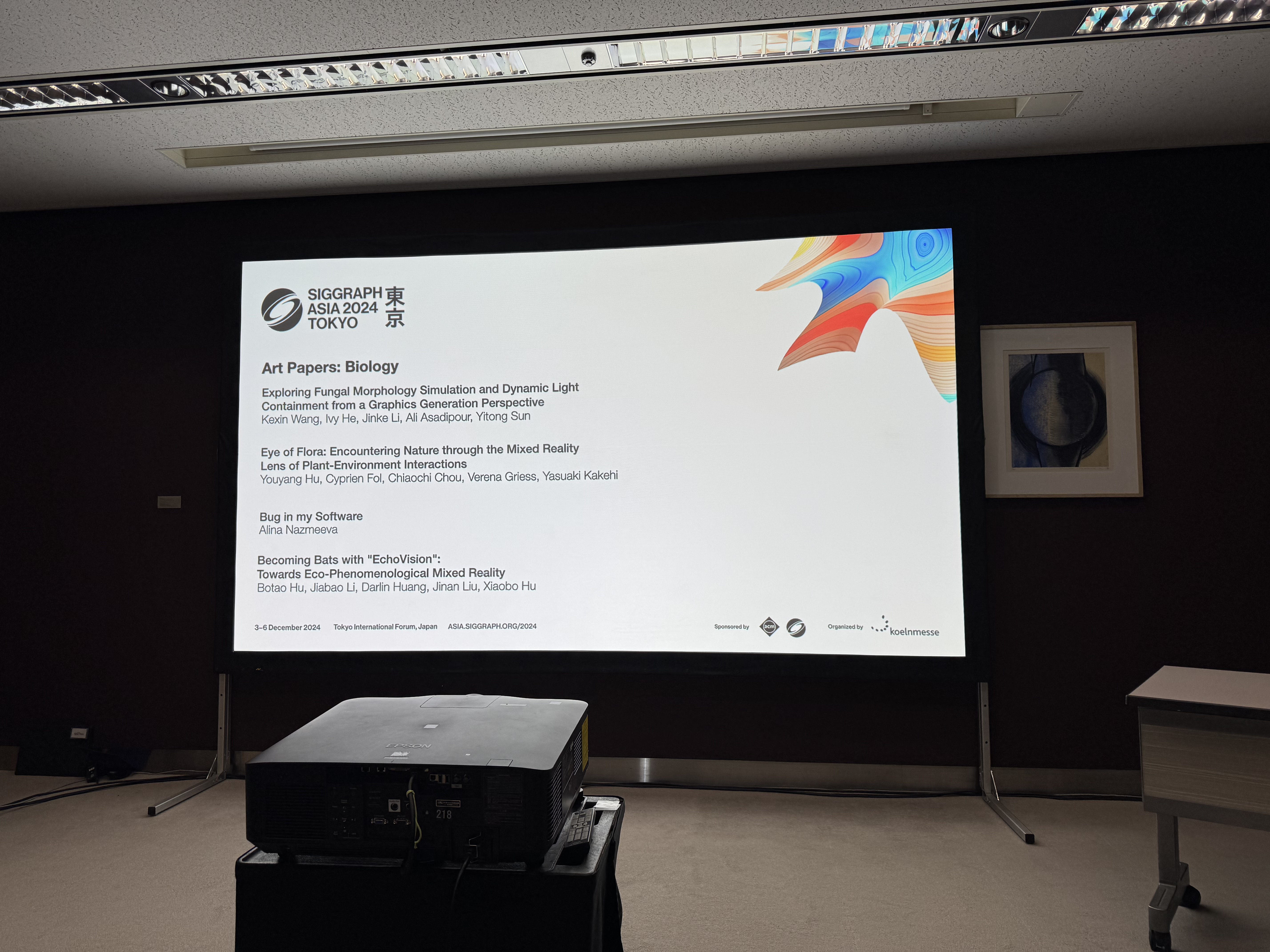
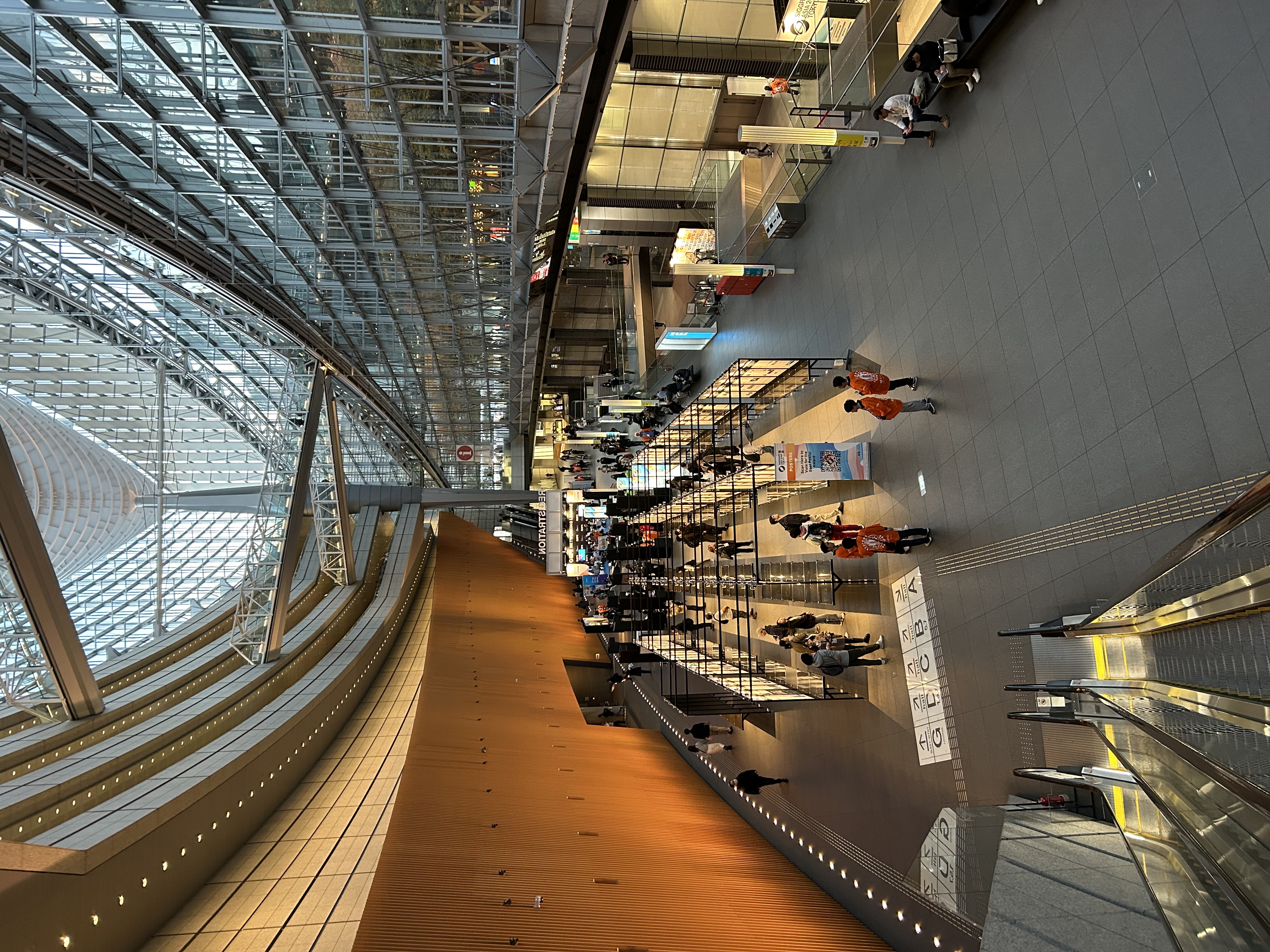
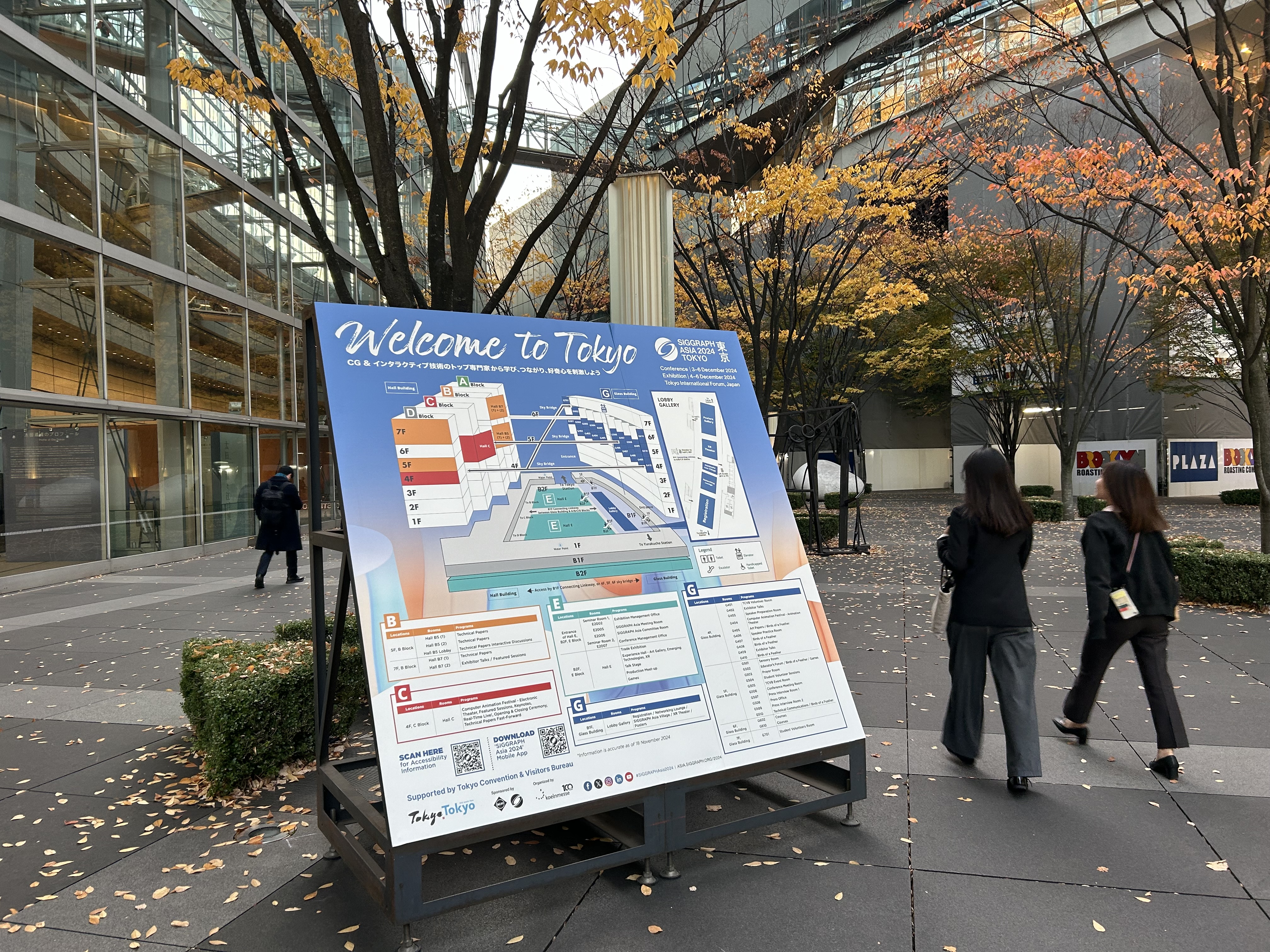
artineer researcher Kexin Wang presented the peer-reviewed art paper at SIGGRAPH Asia 2024 Art Papers — exploring how neural cellular automata can simulate and contain living fungal growth as a generative art medium.
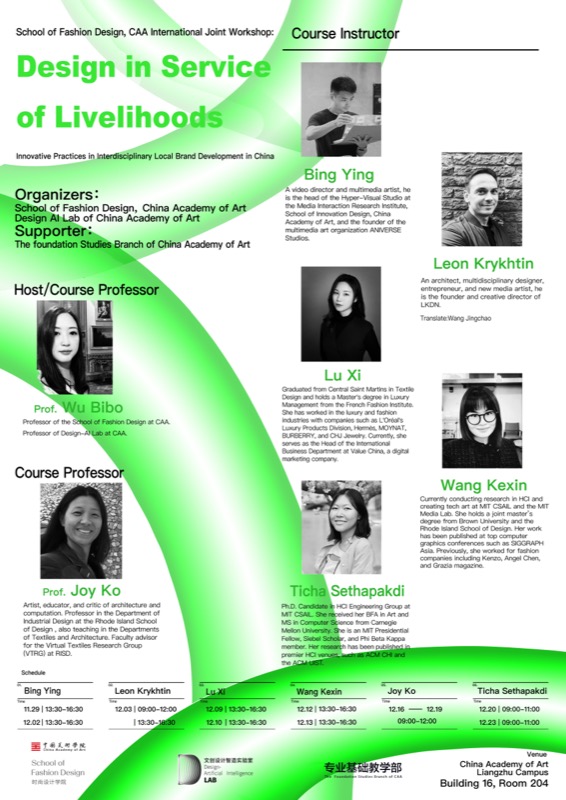
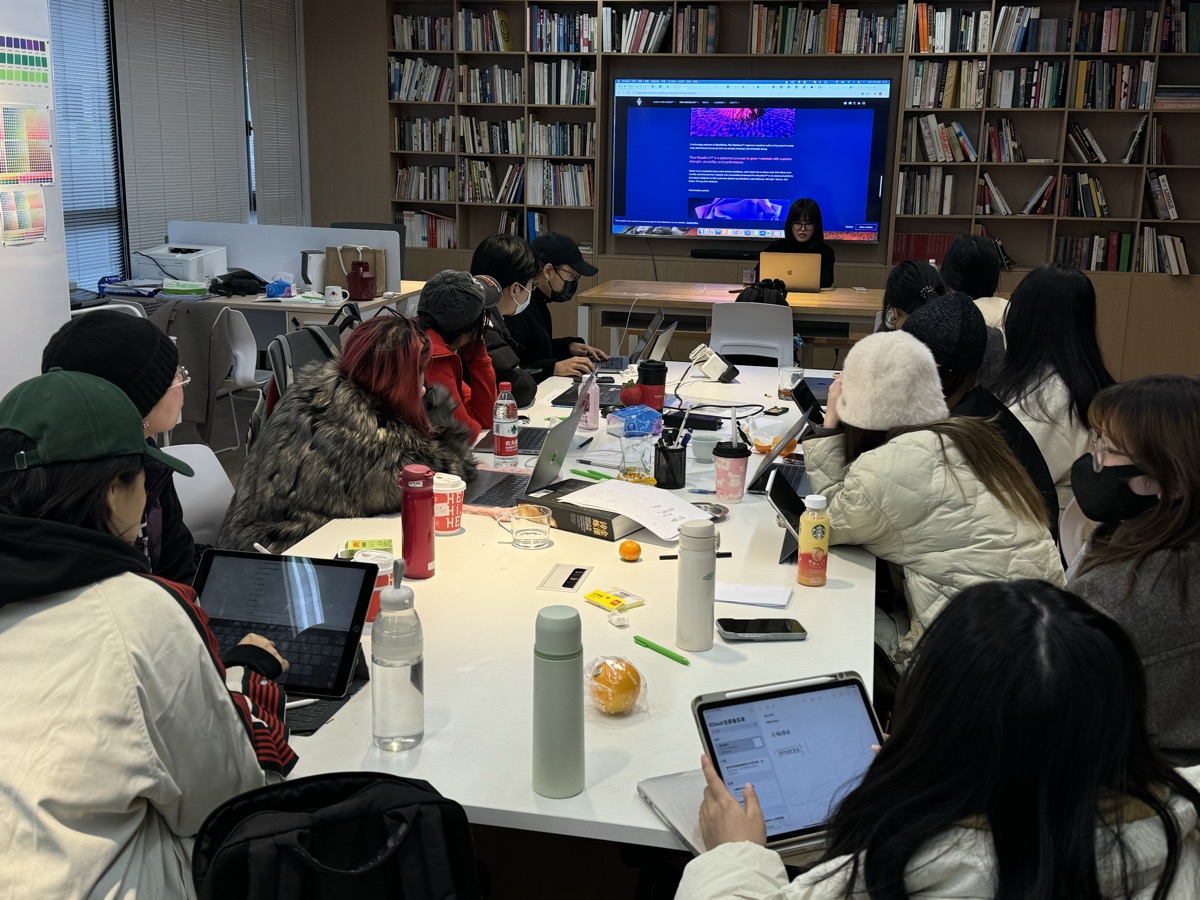
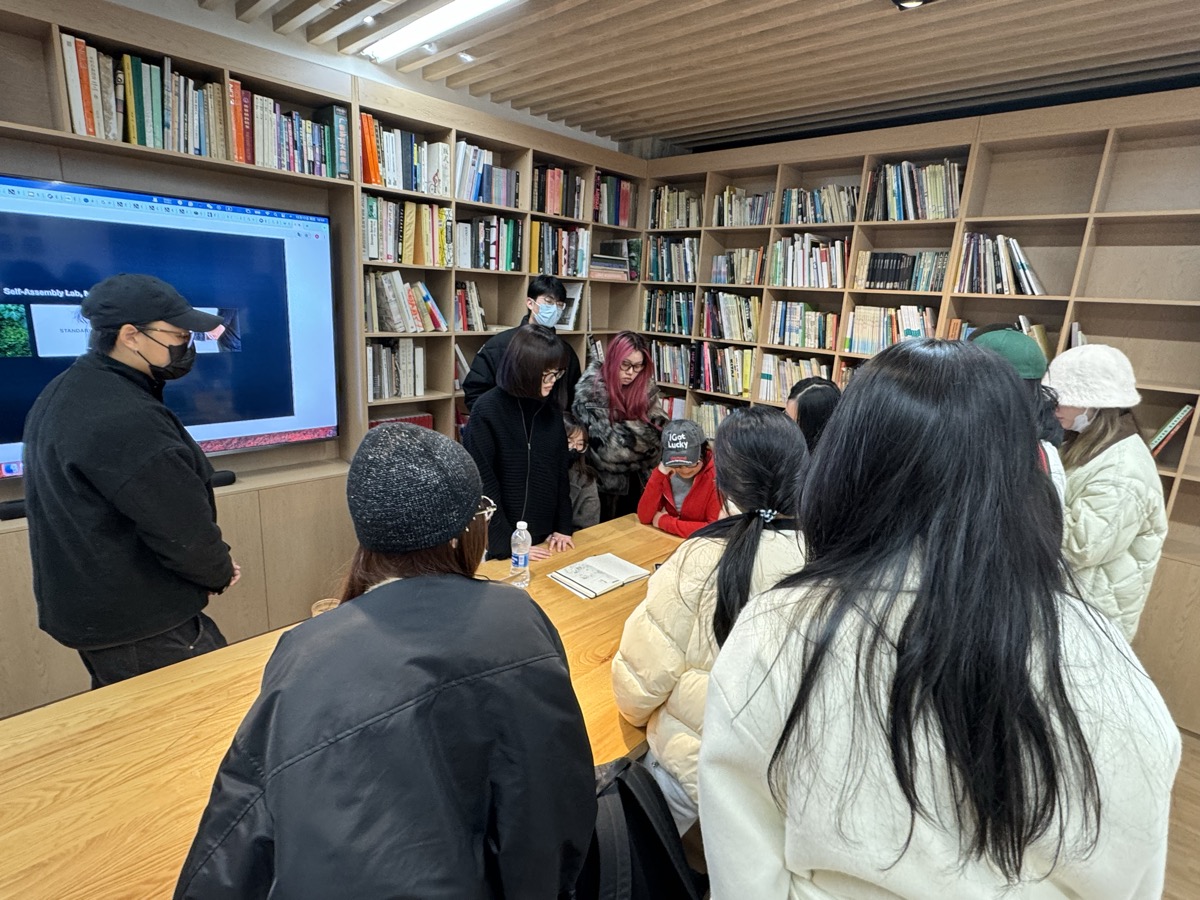
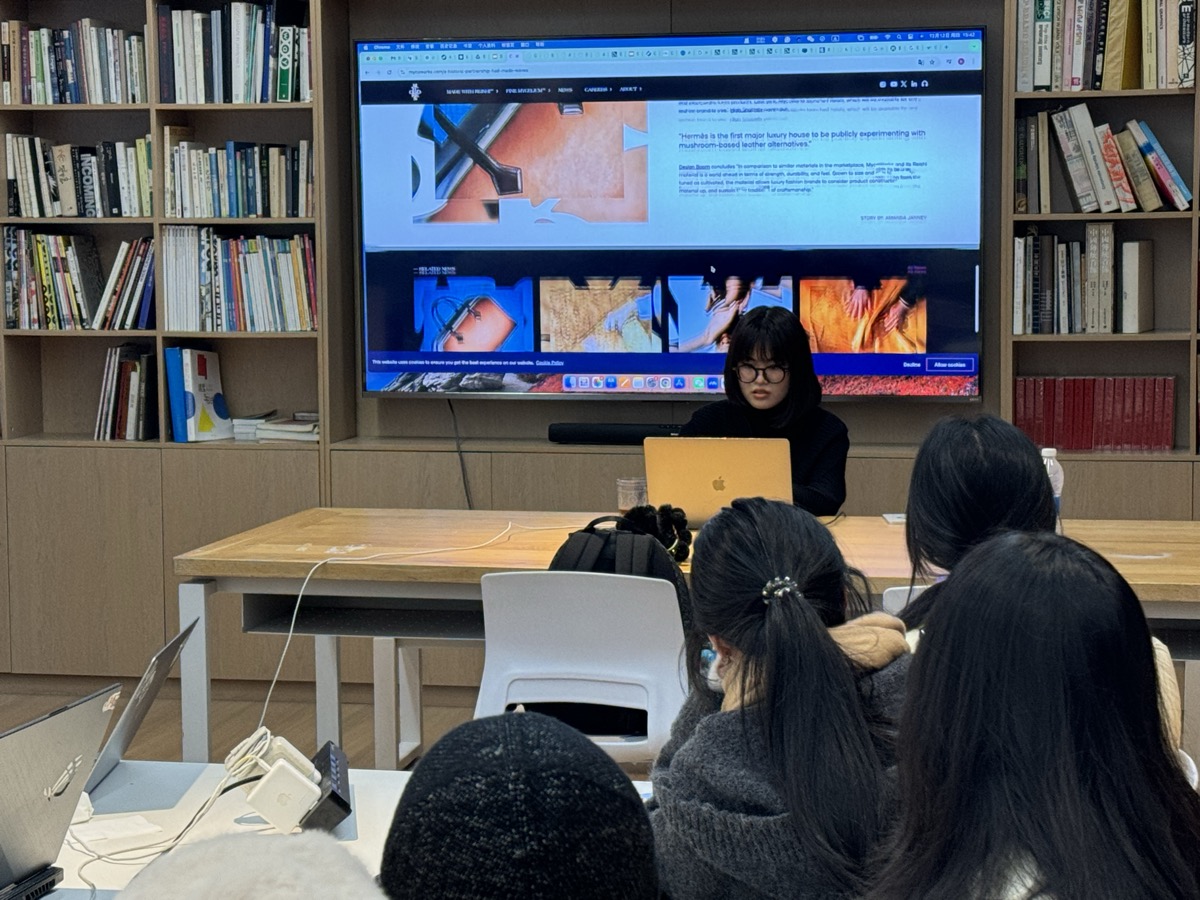
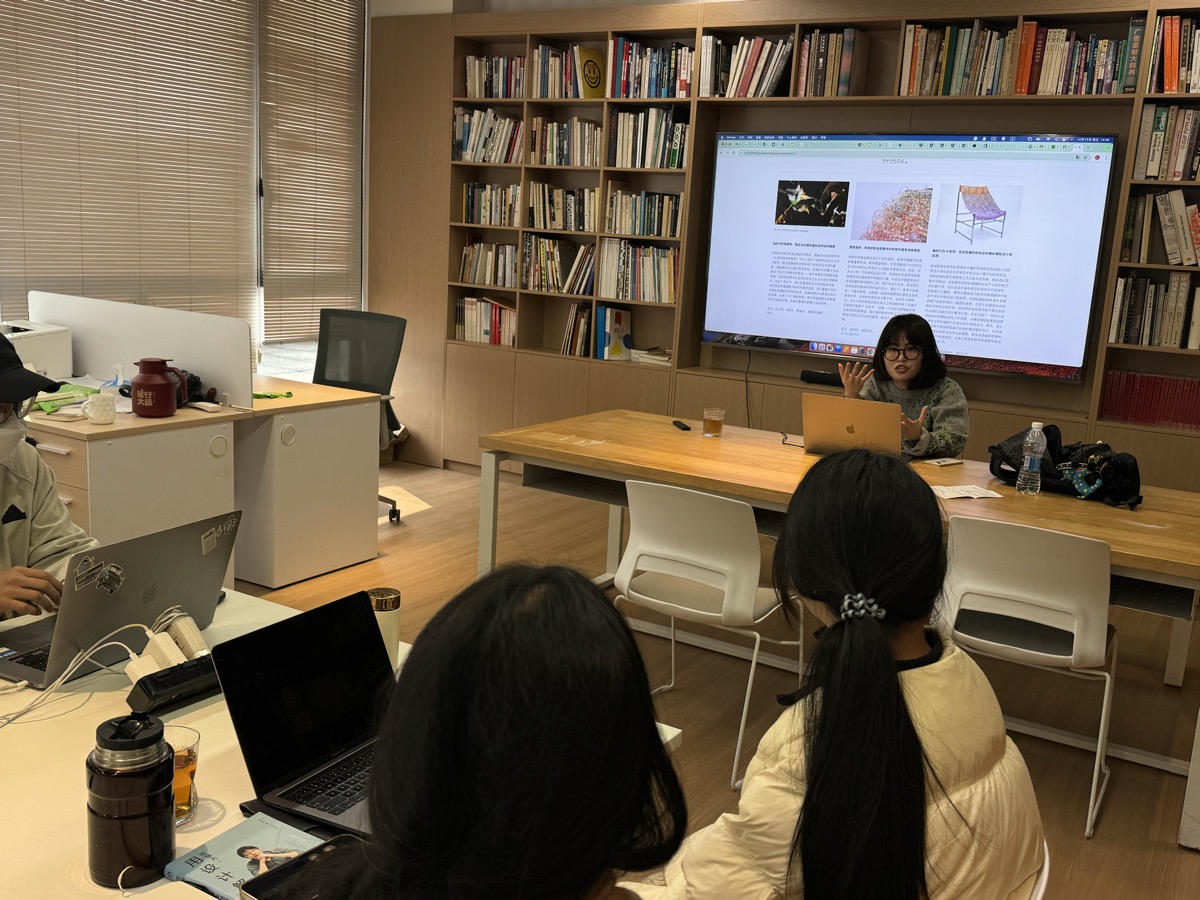
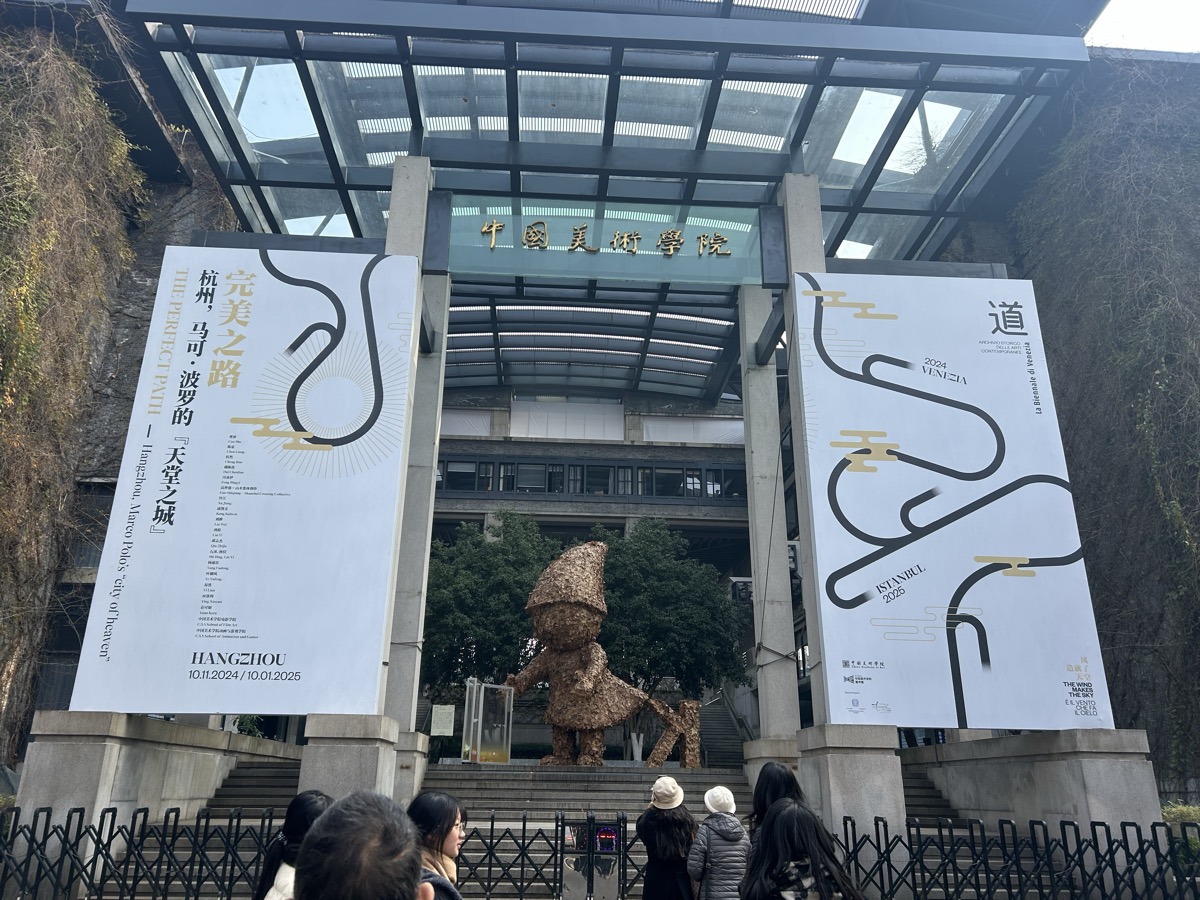
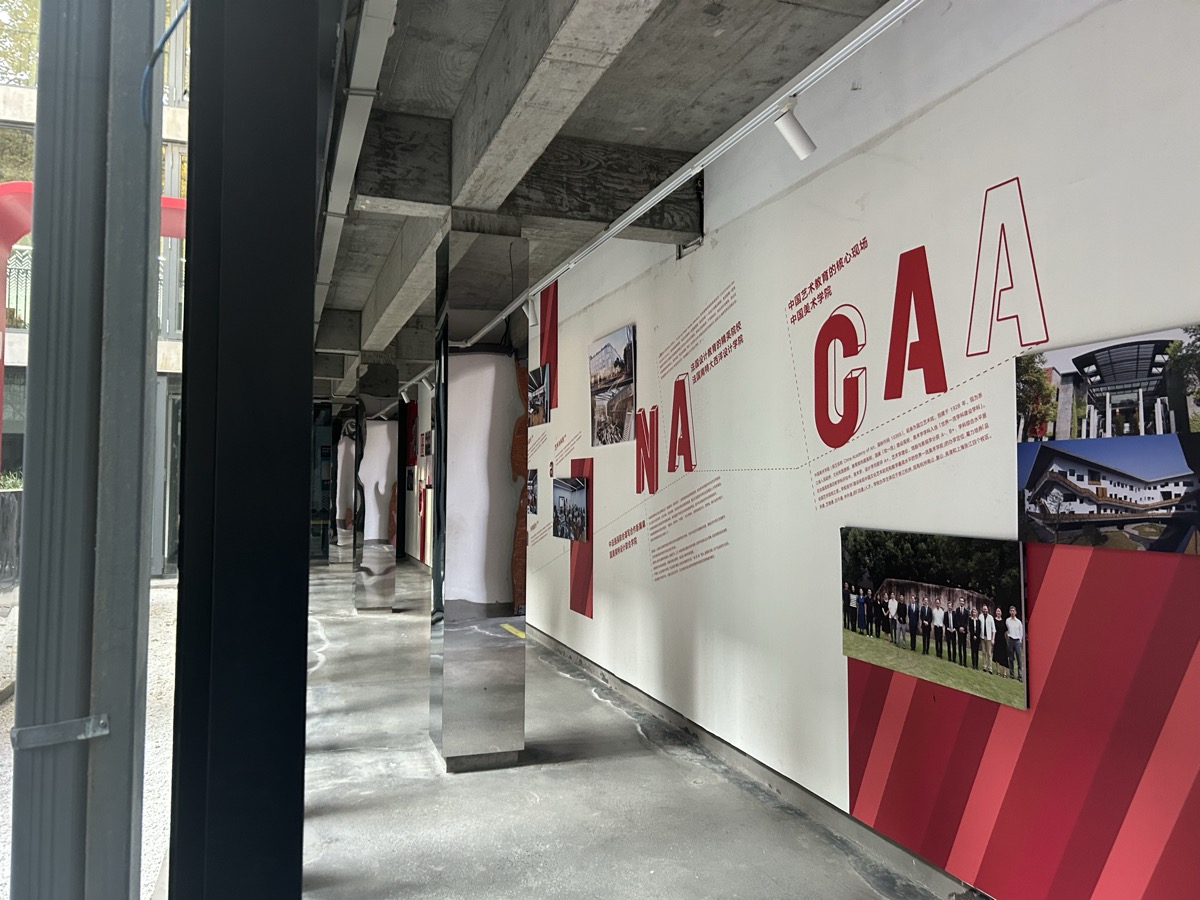
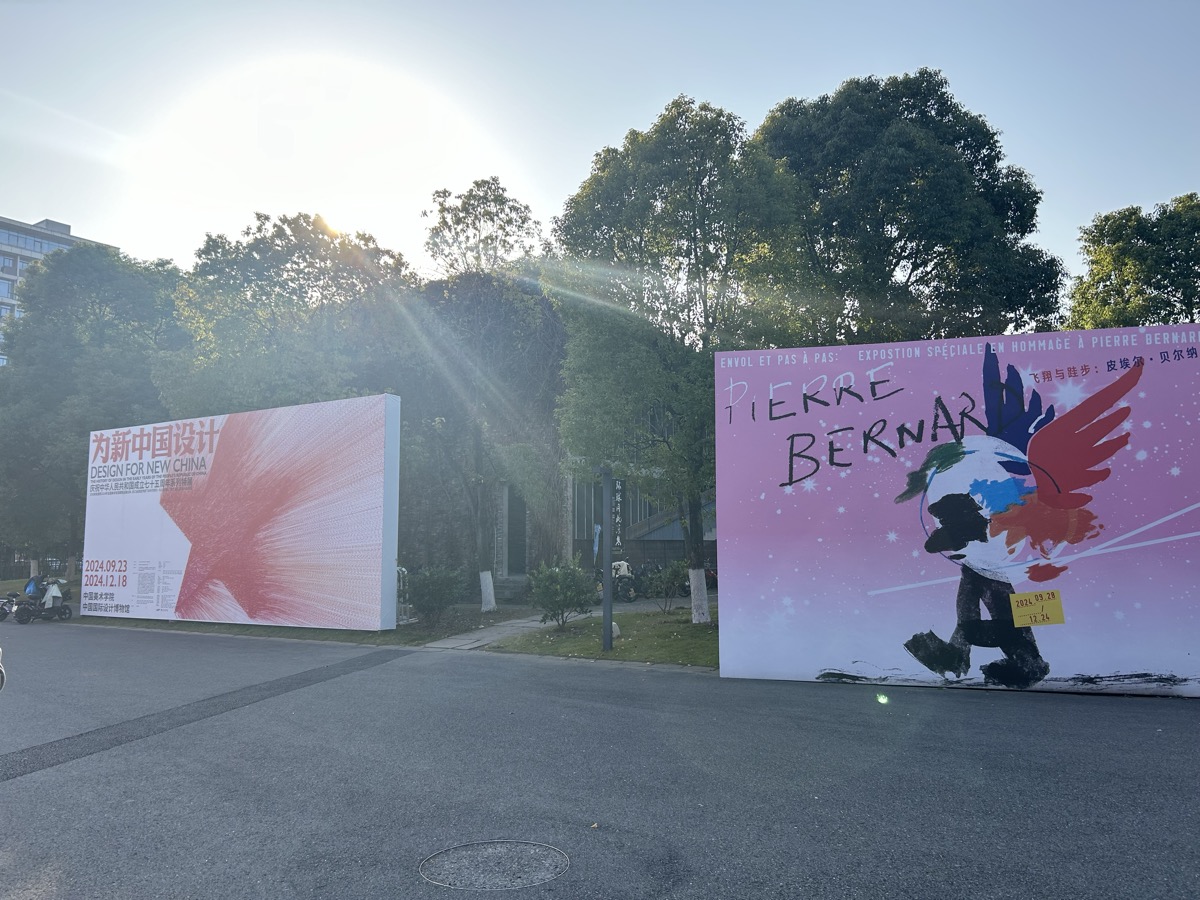
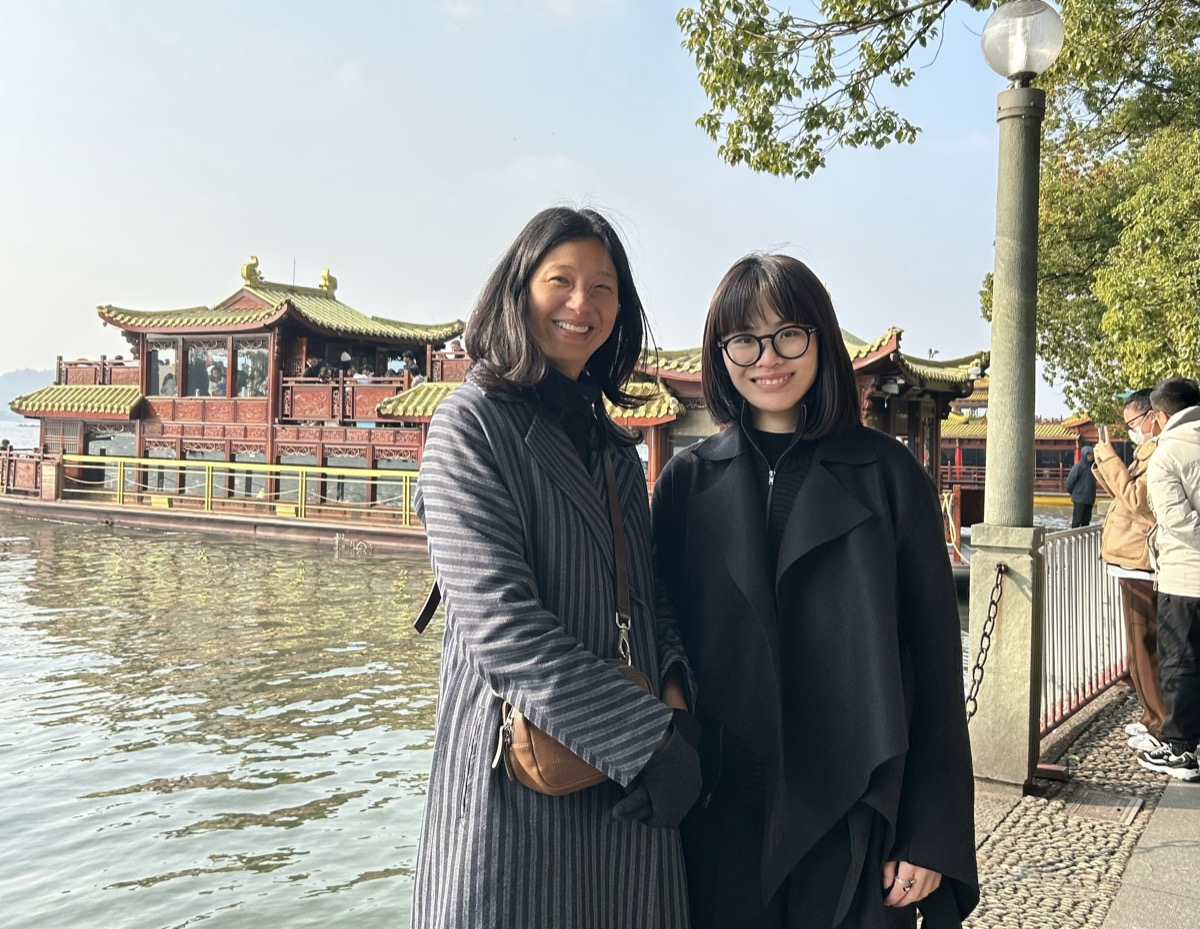
Invited personally by Professor Bibo Wu of the China Academy of Art, artineer artineer researcher Kexin Wang served as guest lecturer, mentor, and co-organiser for this month-long workshop programme centred on design in service of livelihoods. She also coordinated the participation of two distinguished guests: Joy Ko, Professor of Industrial Design at the Rhode Island School of Design (RISD), and Ticha Sethapakdi, PhD researcher at MIT CSAIL — bringing together perspectives from cutting-edge HCI research and design education to explore how design thinking and emerging technology can serve real community and economic challenges. The workshop asked a central question: how can the most lightweight and efficient design approaches address some of the most complex and systemic challenges — to foster inclusivity and equity in our world?
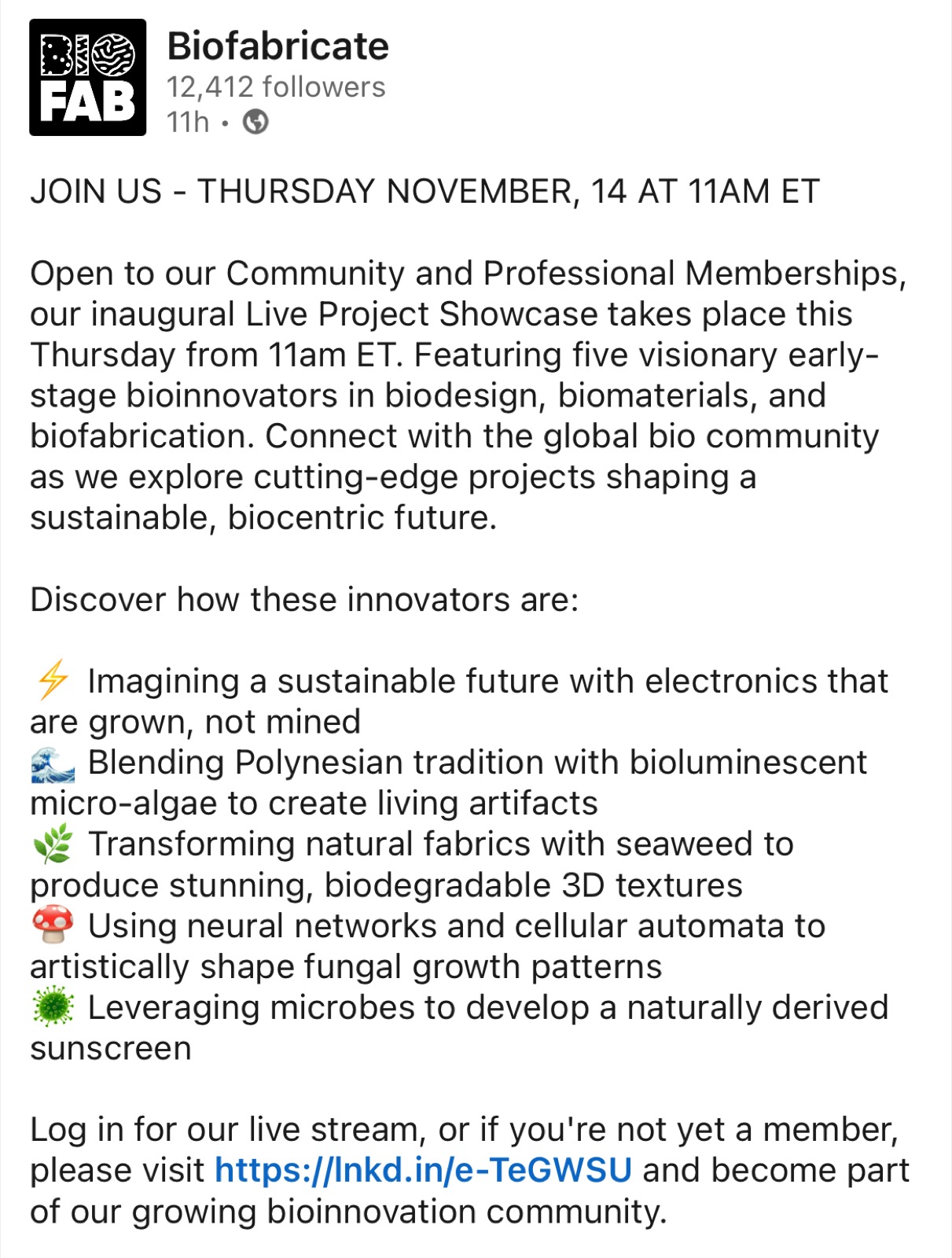
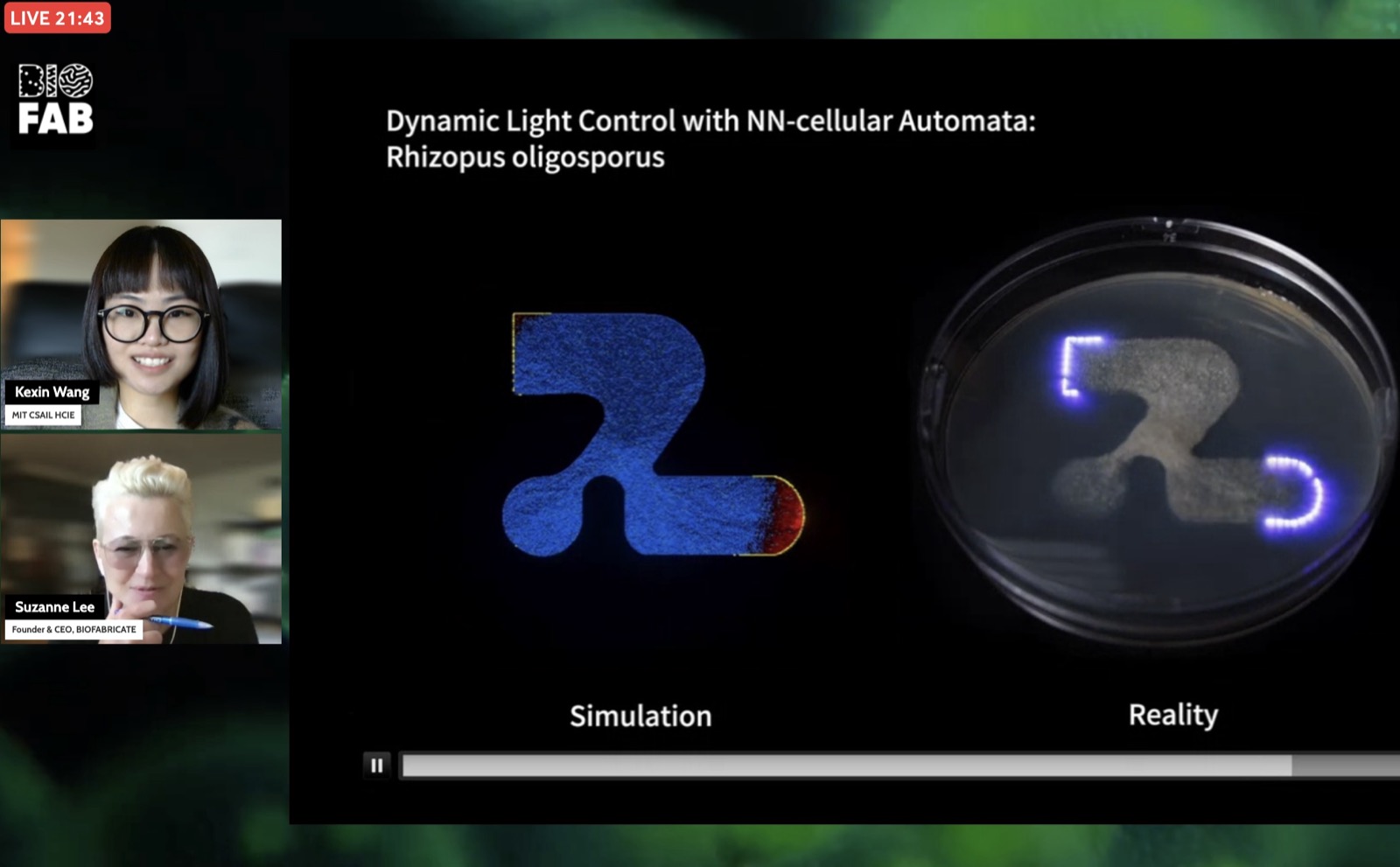
artineer was invited to present Mycelian Micro at BioFabricate — the world's leading bio-innovation summit. Researcher Kexin Wang sat down with BioFabricate's Founder & CEO Suzanne Lee for an in-depth conversation on living materials, biodesign, and the future of bio-art in education — presenting artineer's neural-cellular-automata light control of living fungi (Rhizopus oligosporus), from simulation to reality.

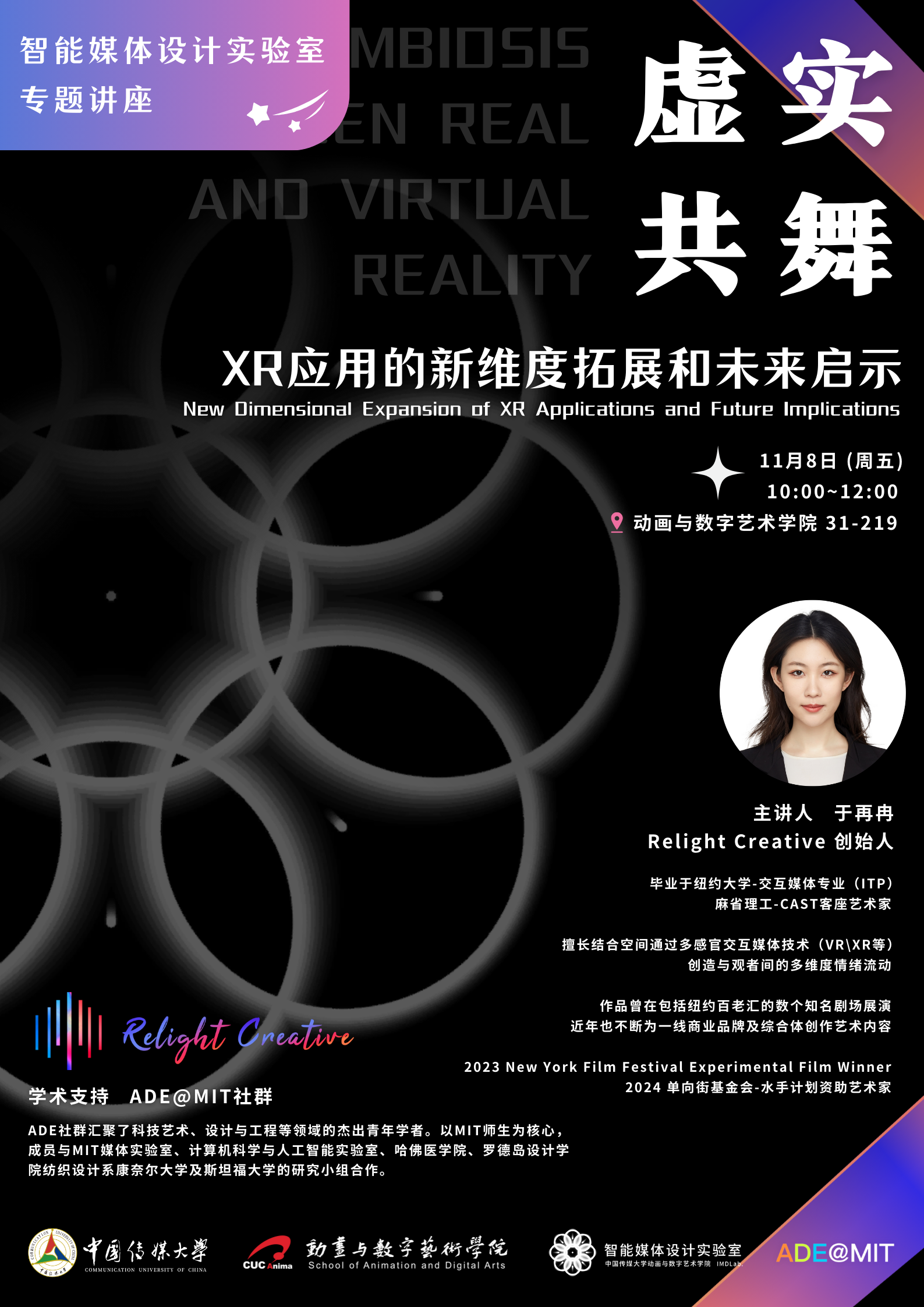
MIT ADE and the Communication University of China School of Animation and Digital Arts co-hosted this in-person lecture on XR in digital art practice. artineer instructor Zairan Yu — MIT-CAST visiting artist — explored how XR technology dissolves the boundary between the real and virtual, opening new creative possibilities in cultural, artistic, and commercial contexts.
Zairan Yu (MFA, NYU ITP) works as an artist and director between Beijing and New York. Her multisensory VR/XR works examine the dynamic relationships between people, nature, and society. Exhibited at Broadway venues in New York; winner of the 2023 New York Film Festival Experimental Film Award and recipient of the 2024 Dandelion Foundation Sailor Programme grant.

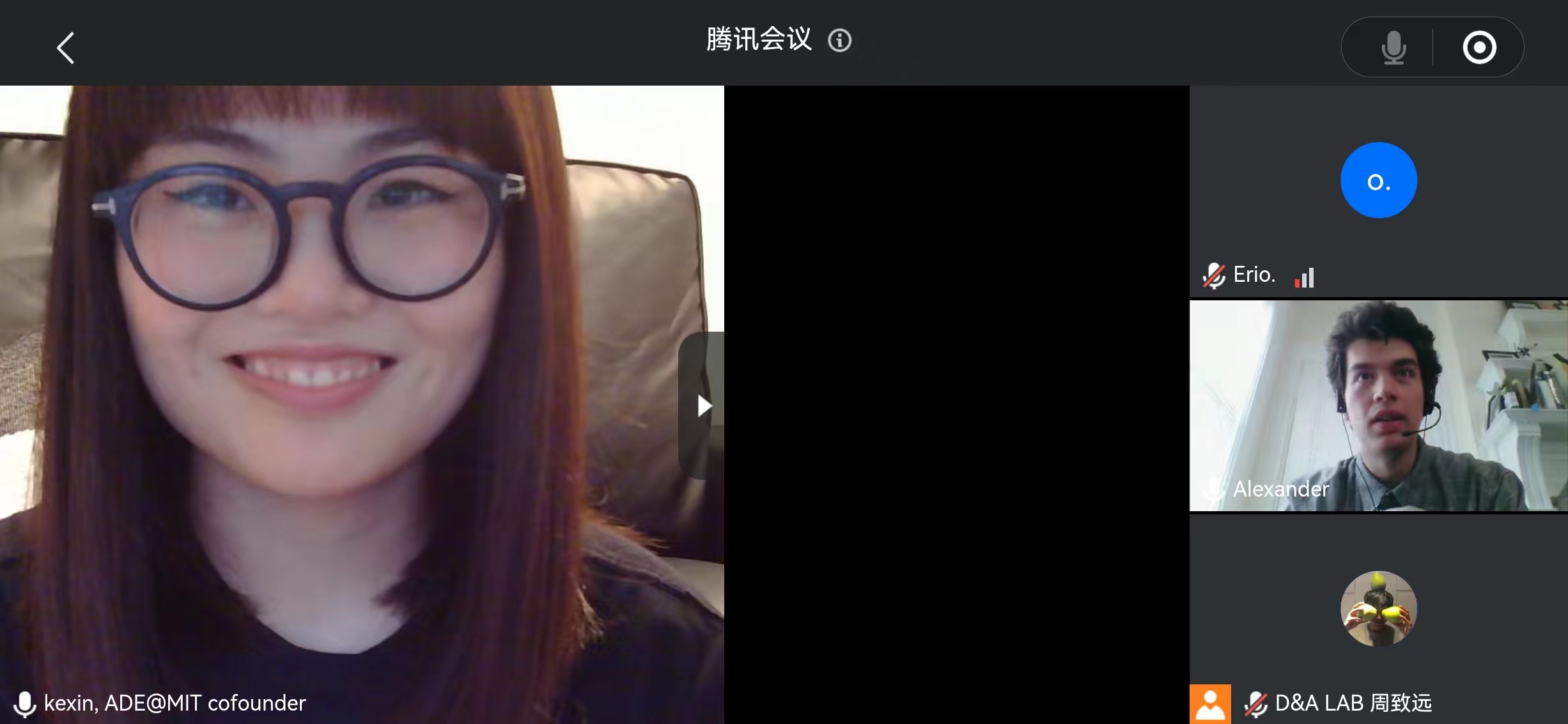
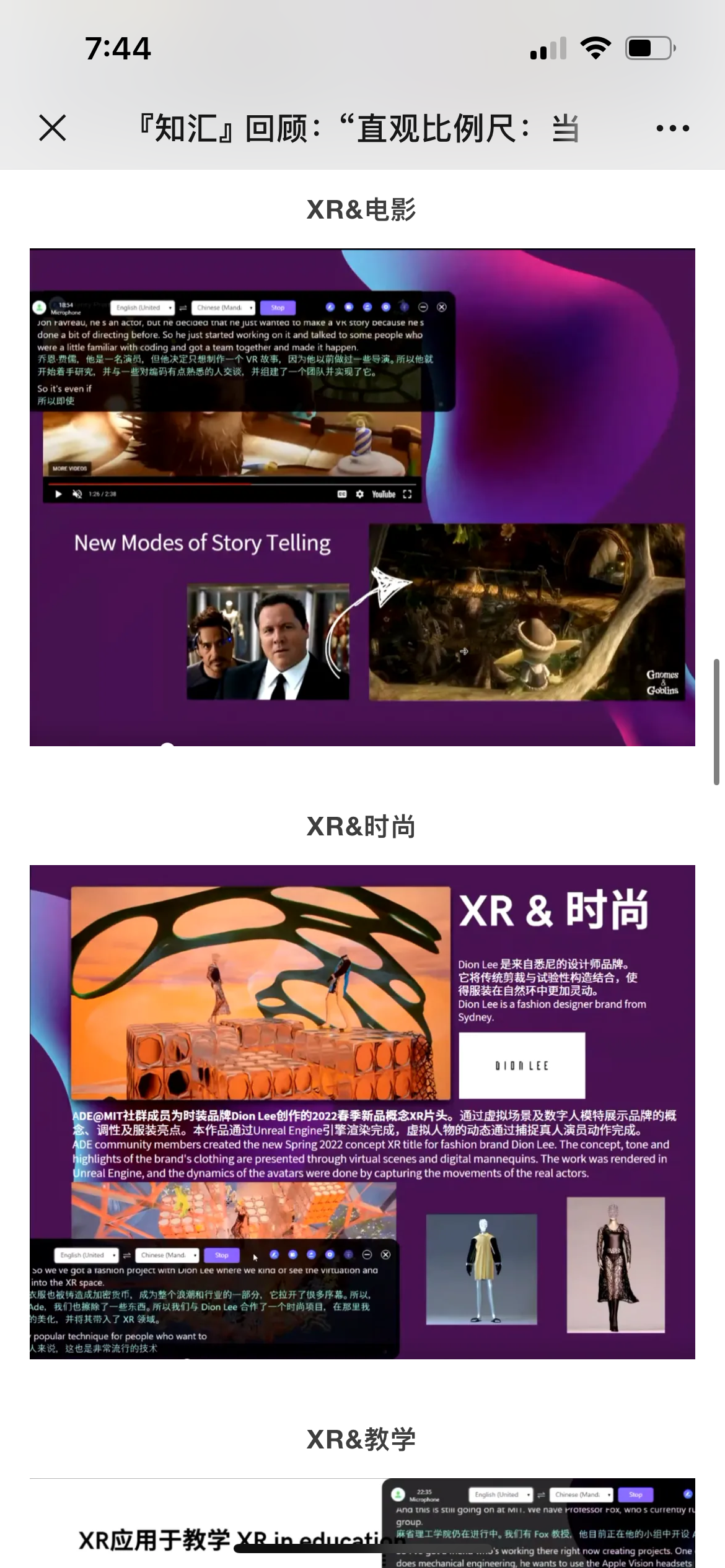
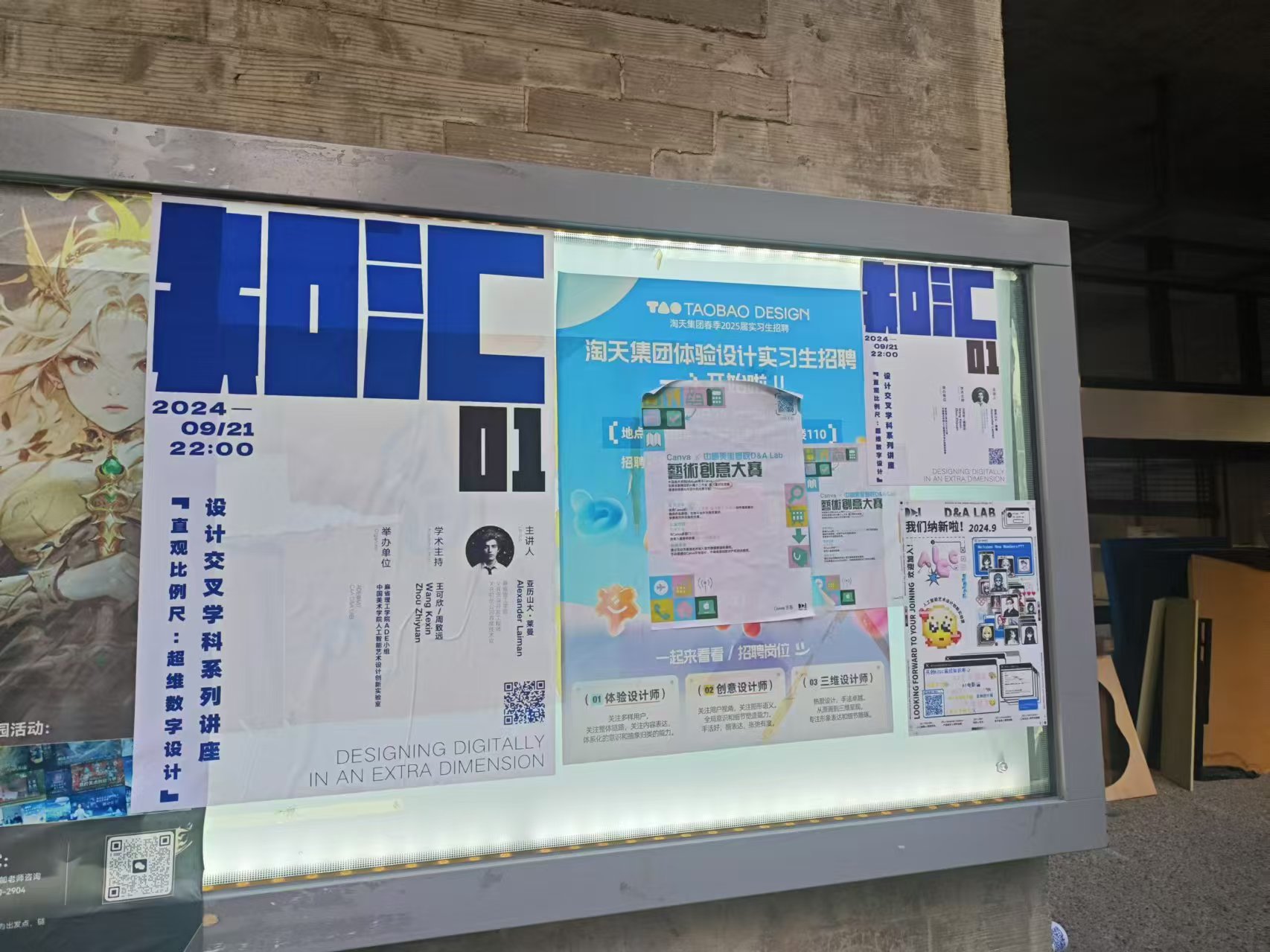
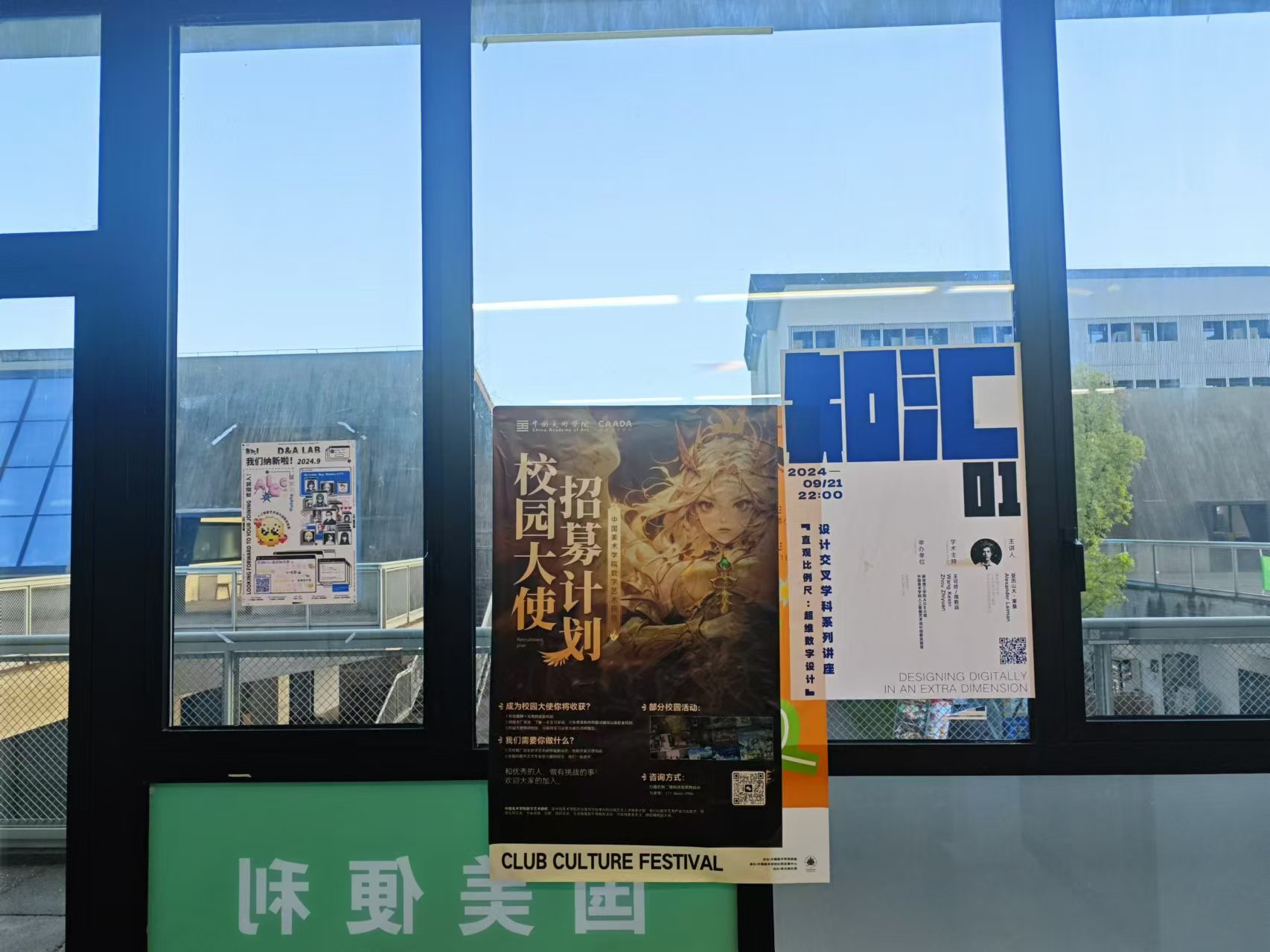
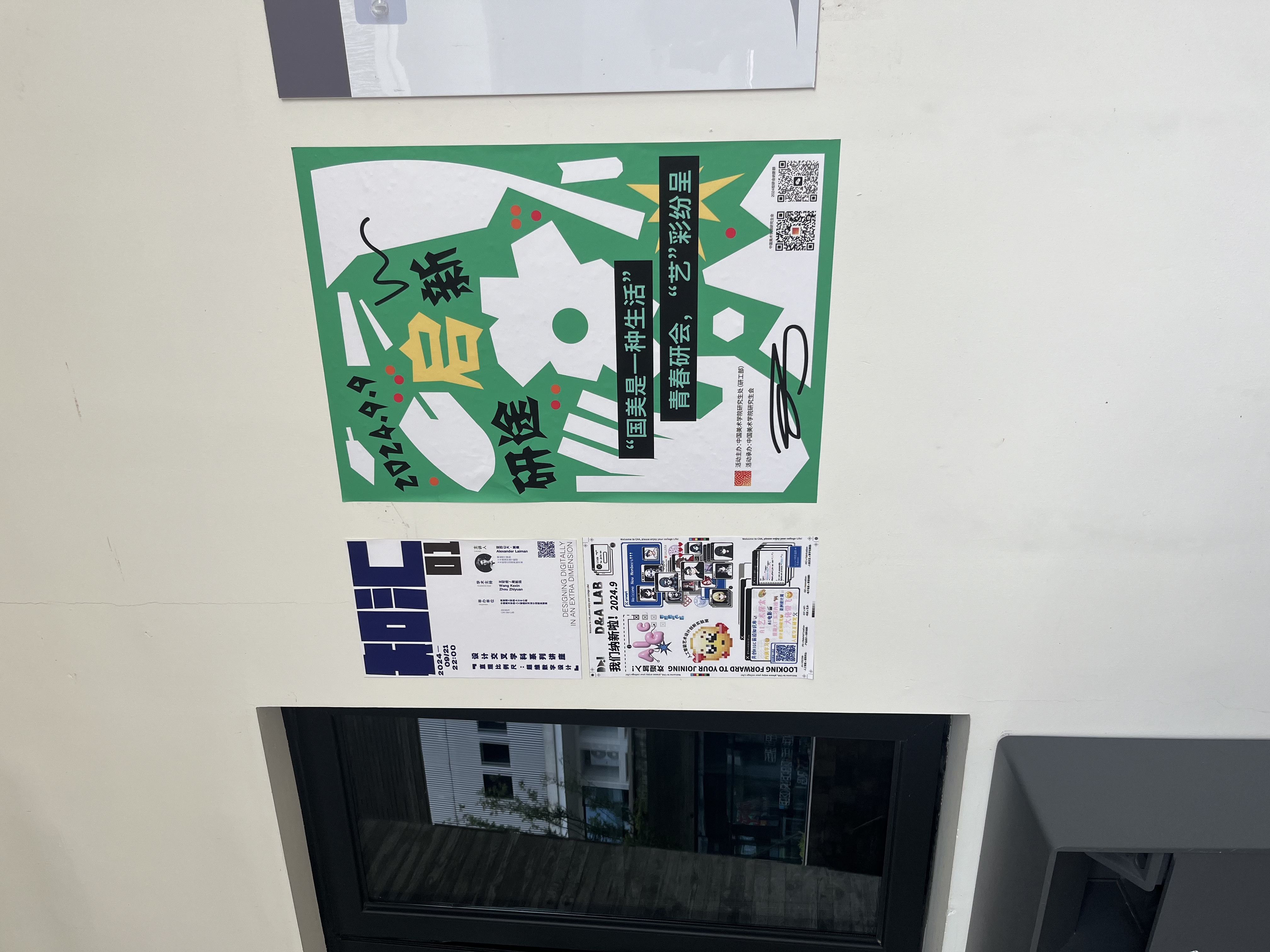
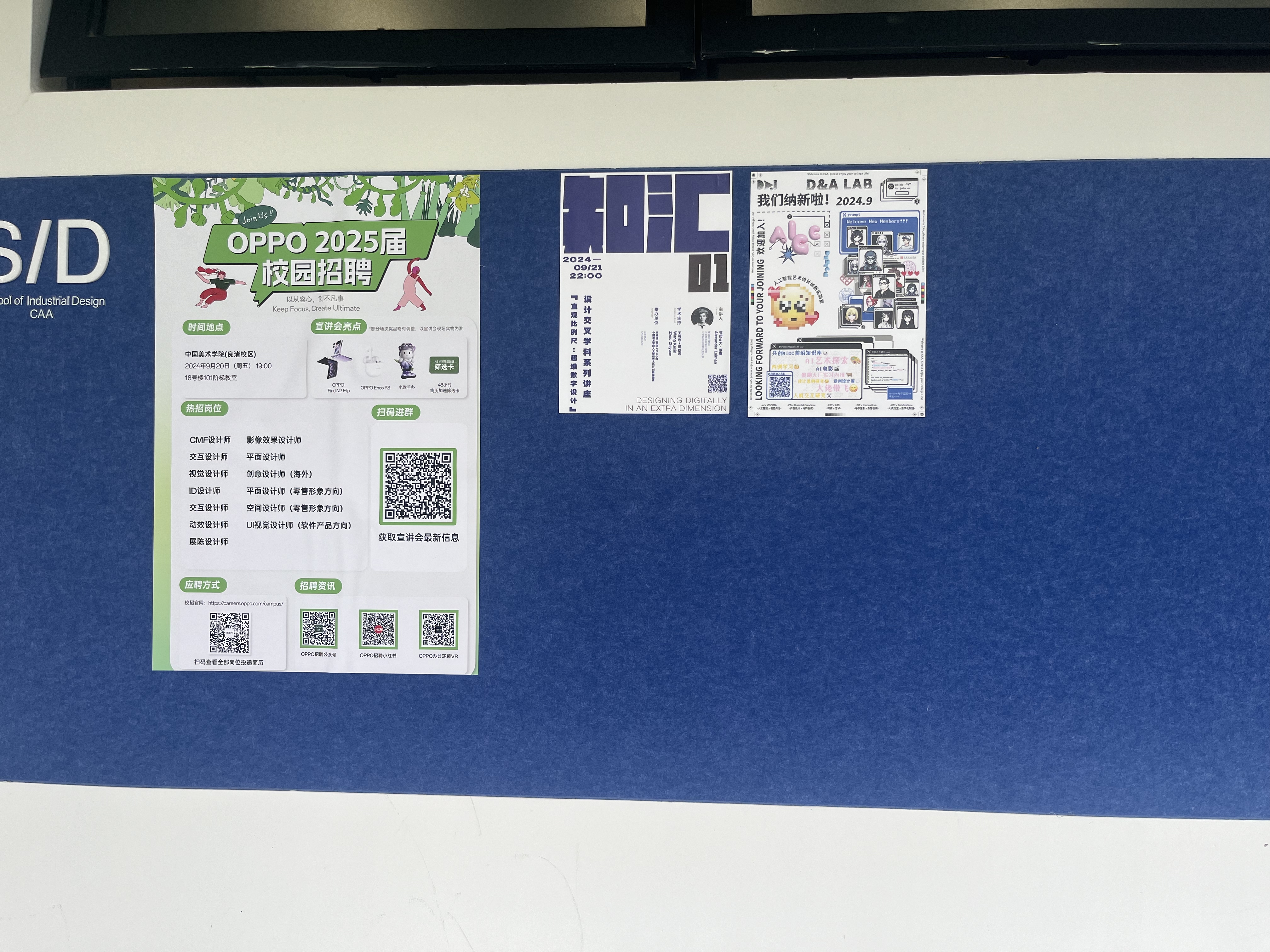
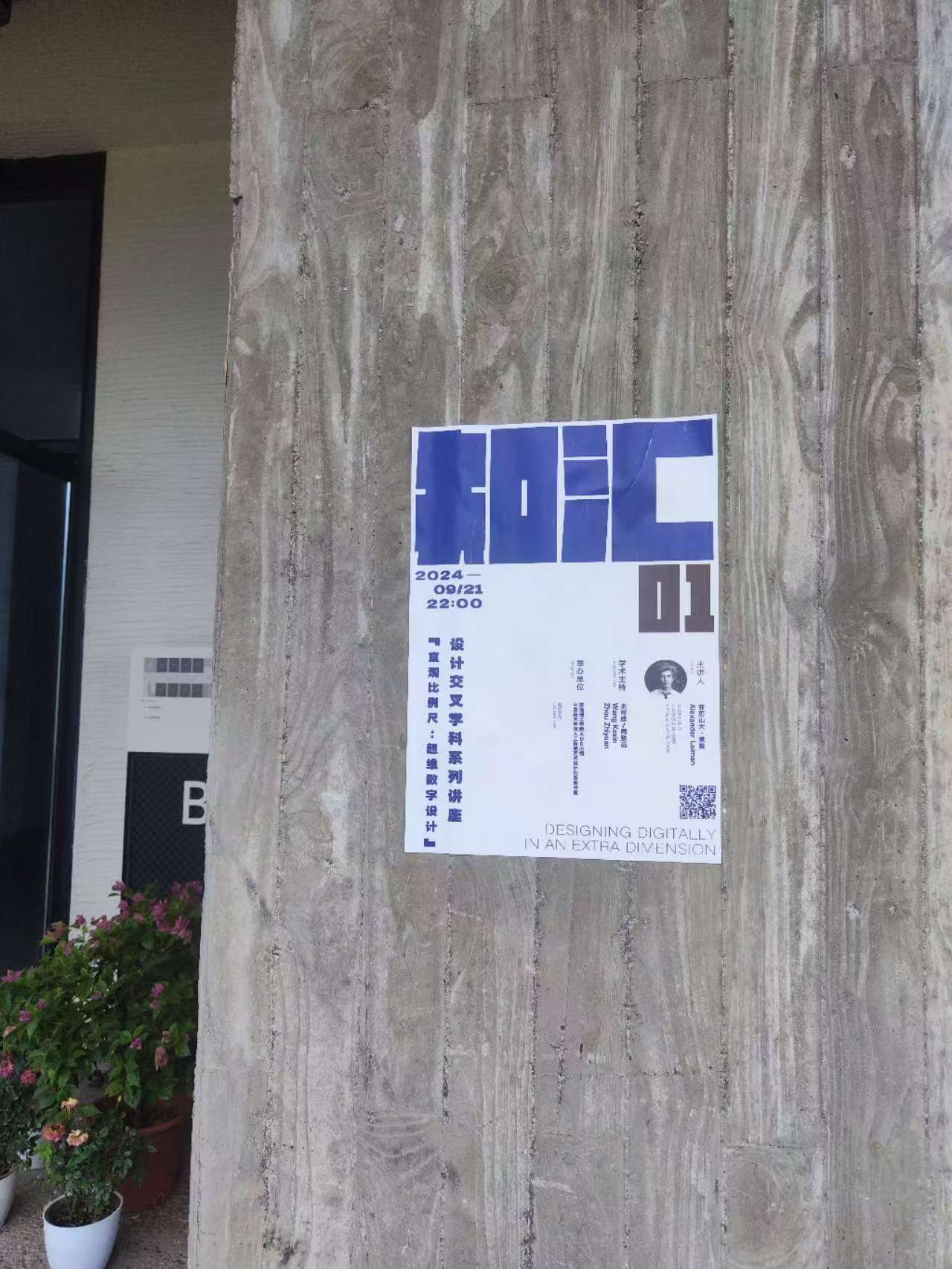
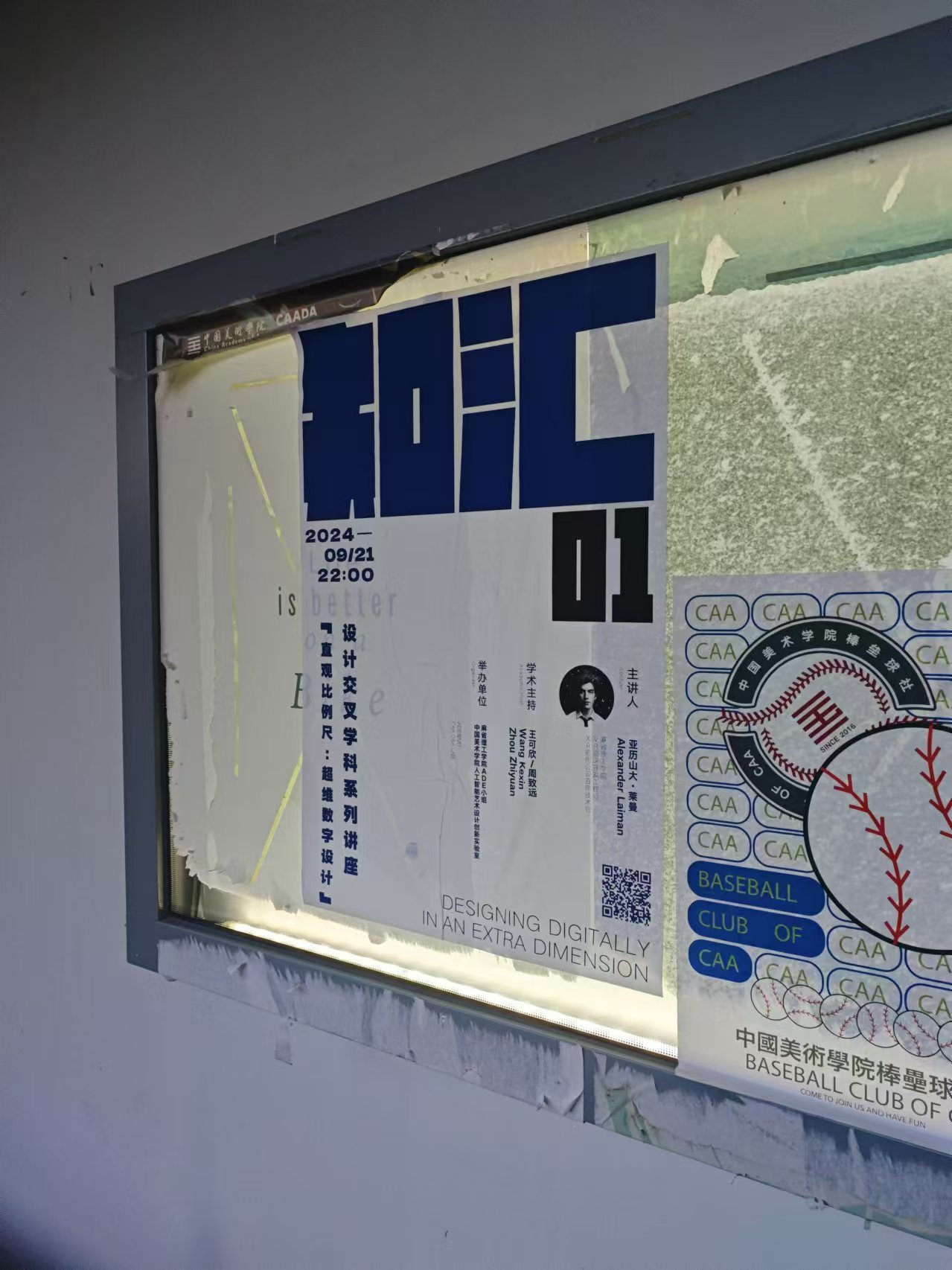
The inaugural episode of Zhihui — a design interdisciplinary lecture series co-organised by MIT ADE and the China Academy of Art AI Art and Design Innovation Lab, focused on HCI, art, and technology. artineer instructor Alex delivered the opening lecture: Intuitive Scale and Hyperdimensional Digital Design.
Alex is a senior VR engineer and researcher with 7+ years of industry and research experience. He was president of the MIT VR/AR Association and studied Physics, Computer Science, Materials Science, and Media Arts (MIT Media Lab). Since 2018 he has been a VR researcher at MIT's Fluid Interfaces and City Science groups, and an instructor for MIT's IAP course Intro to VR. Industry roles include Senior Simulation Engineer at Ultraleap, Senior VR/AR Engineer at ConceptHealth, and CTO of an XR startup.
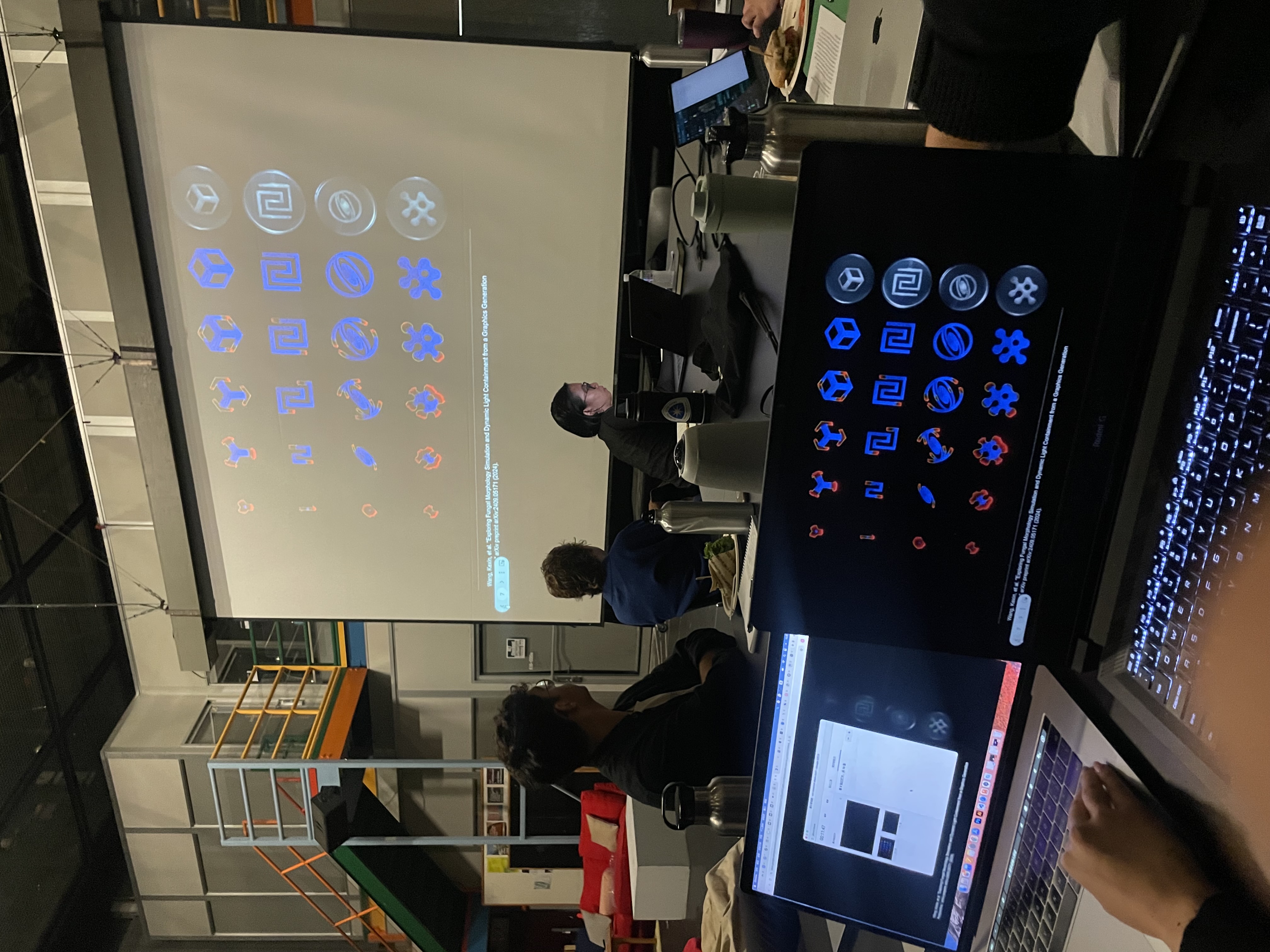
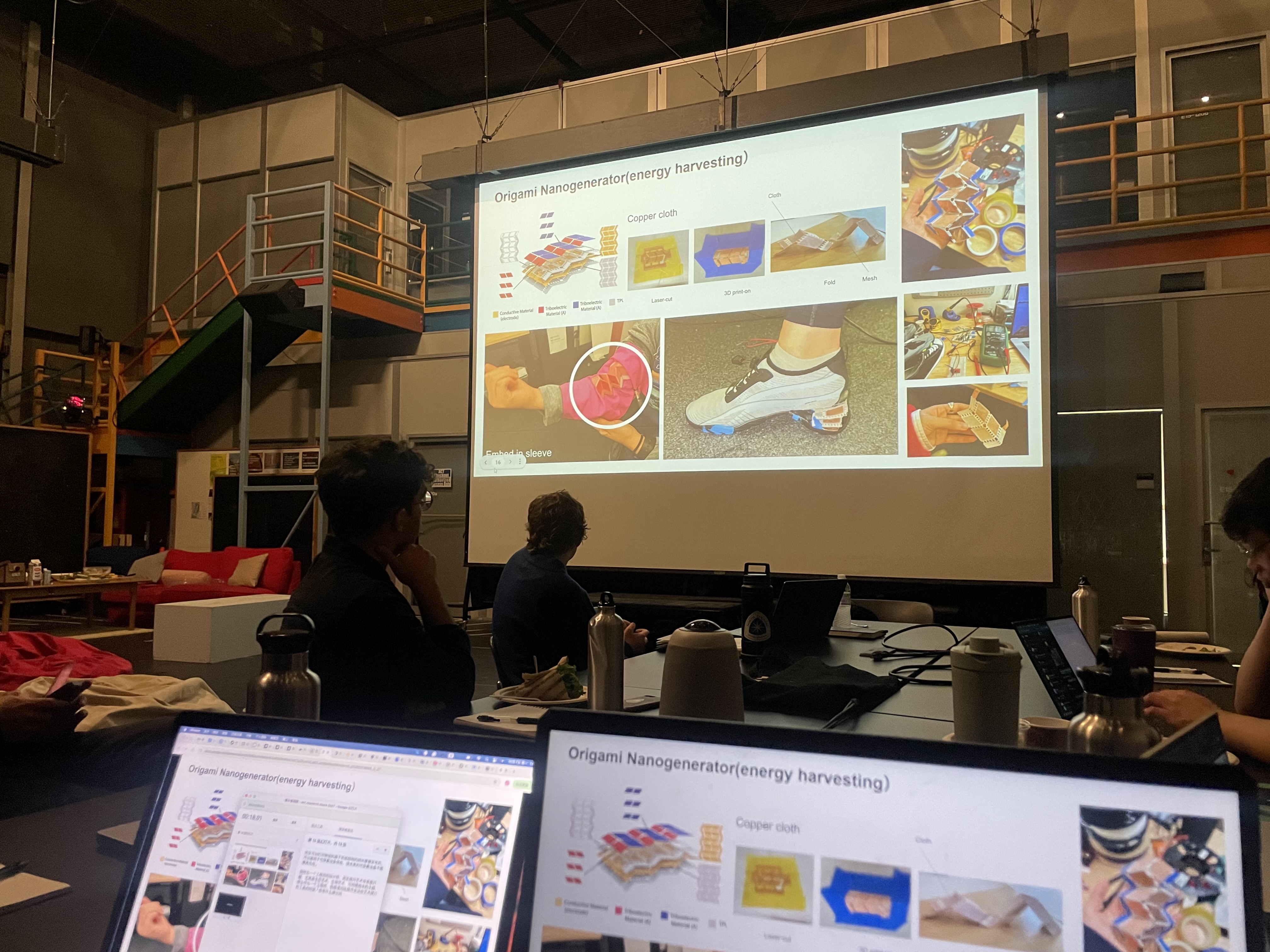
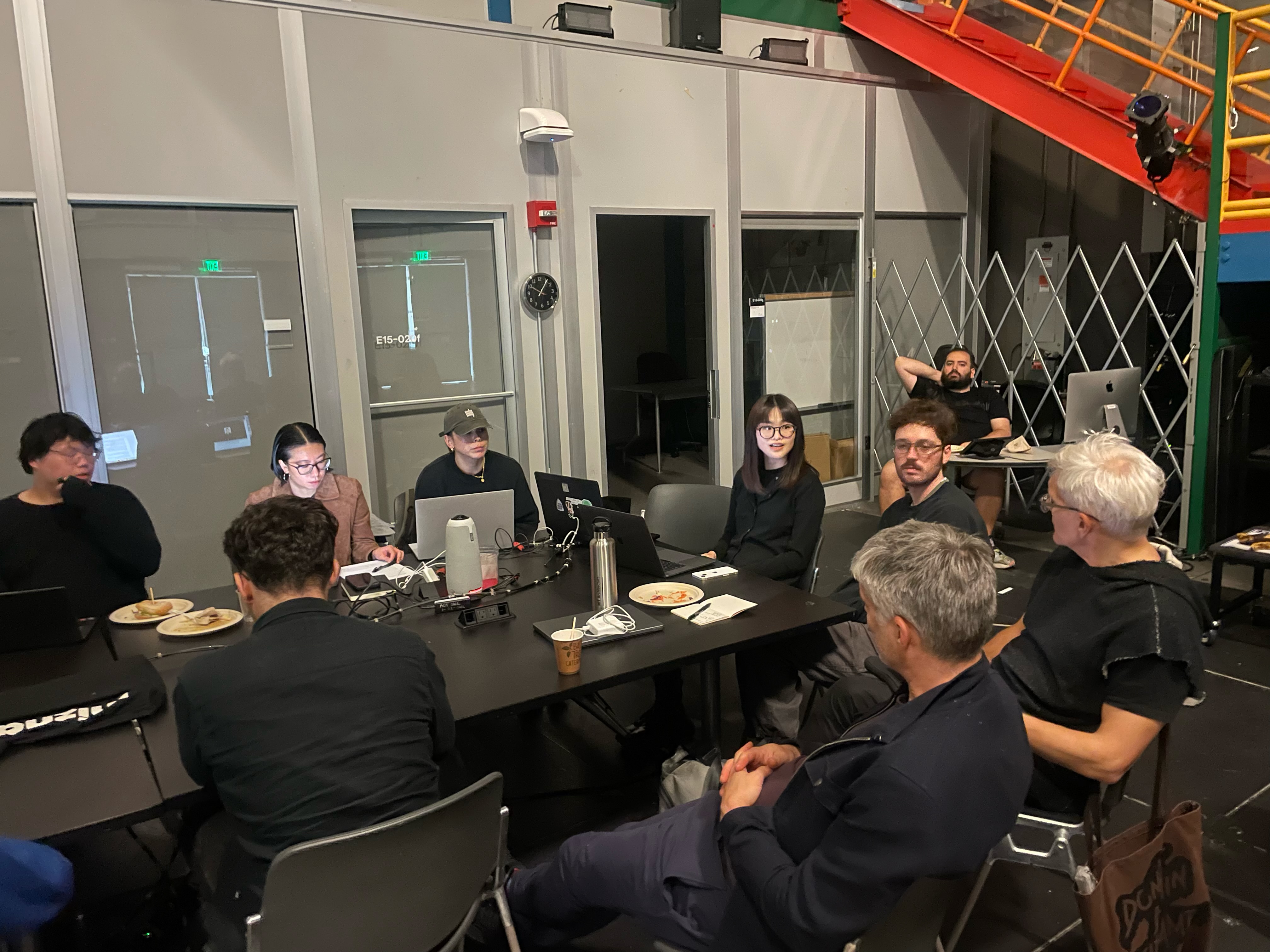
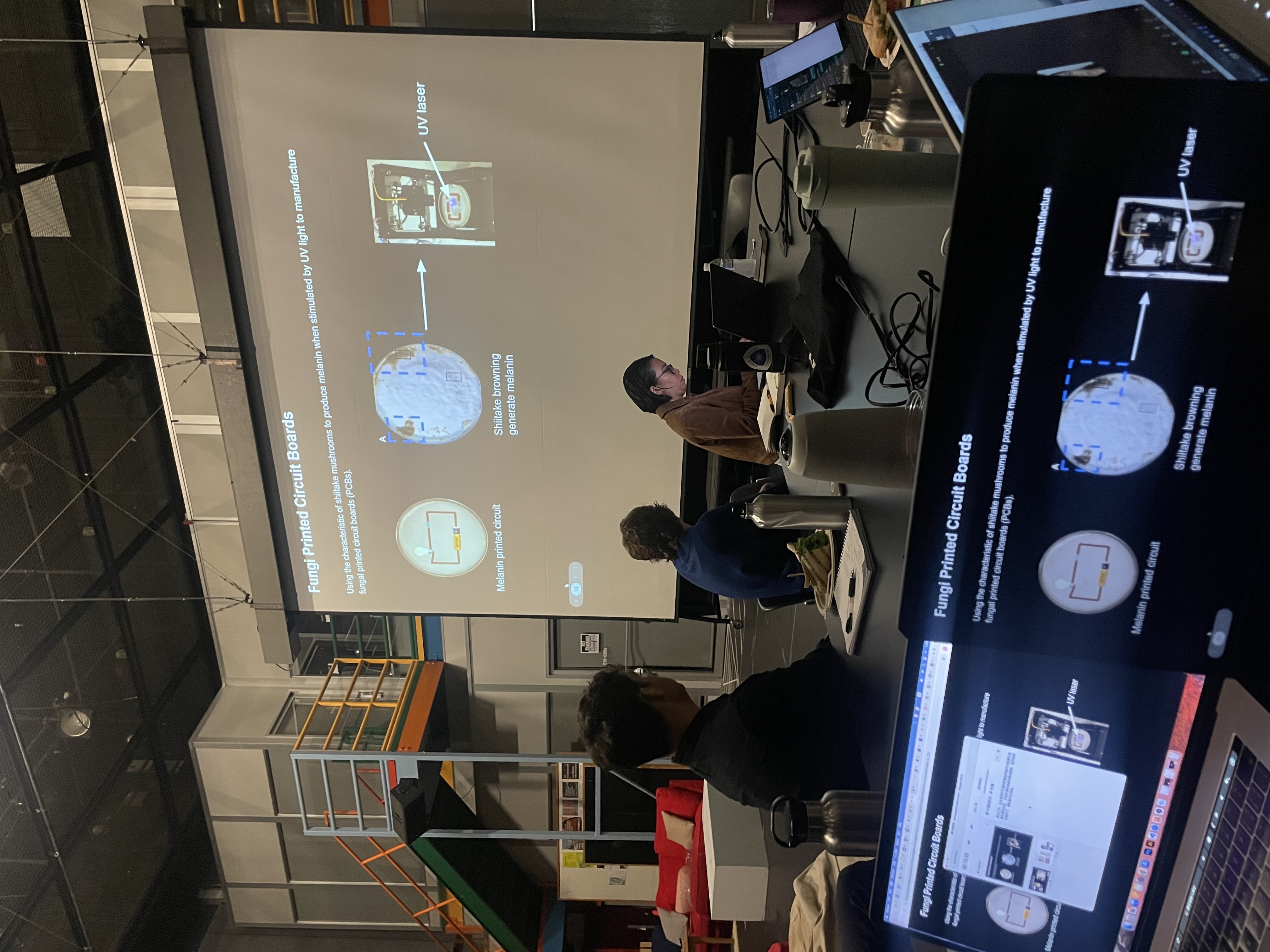
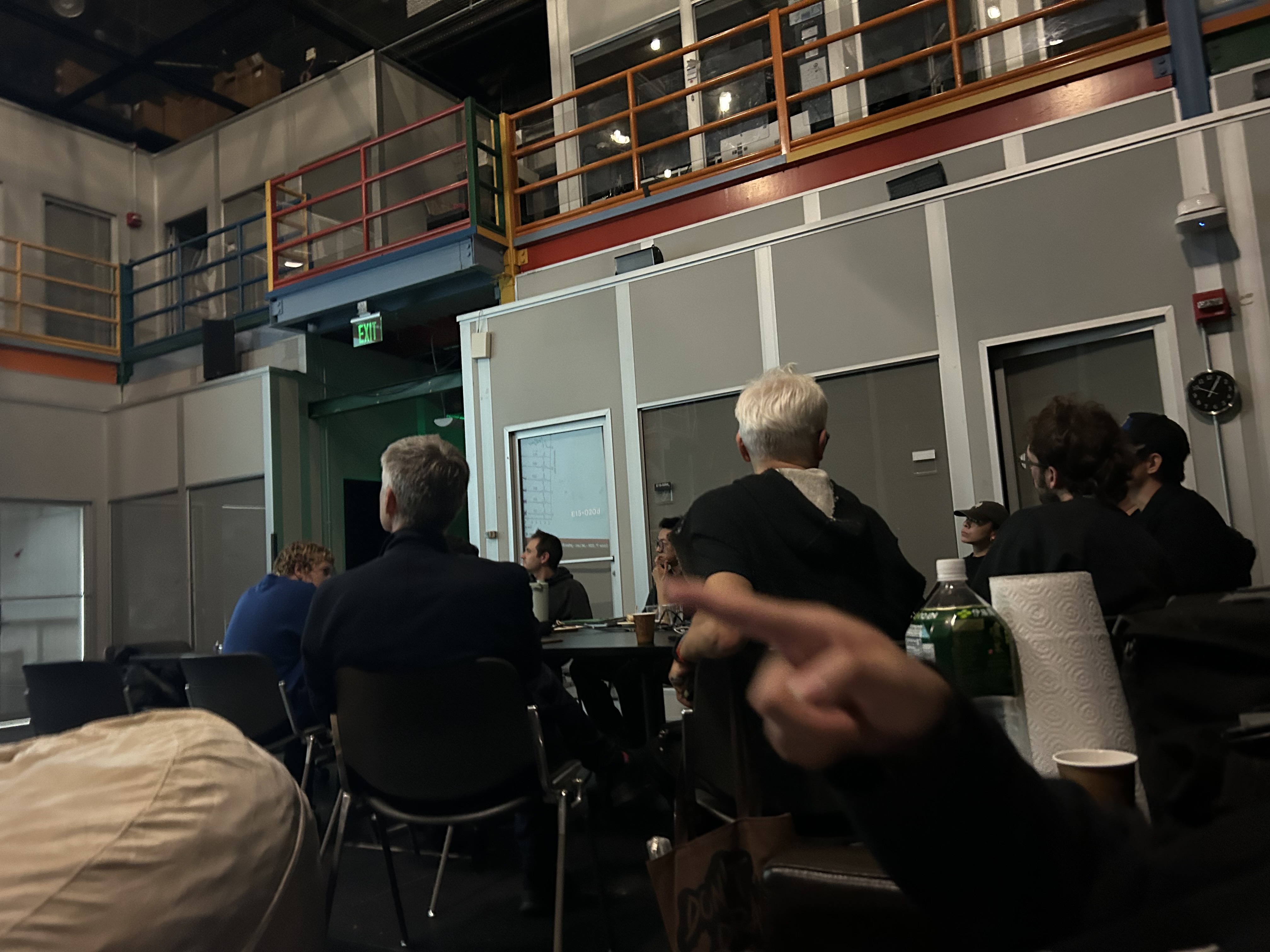
Presented inside MIT's ACT Cube to an audience of artists, researchers, and technologists. ACT co-director Gediminas Urbonas — internationally recognized artist and educator — engaged directly in discussion about living materials and bio-computational art.
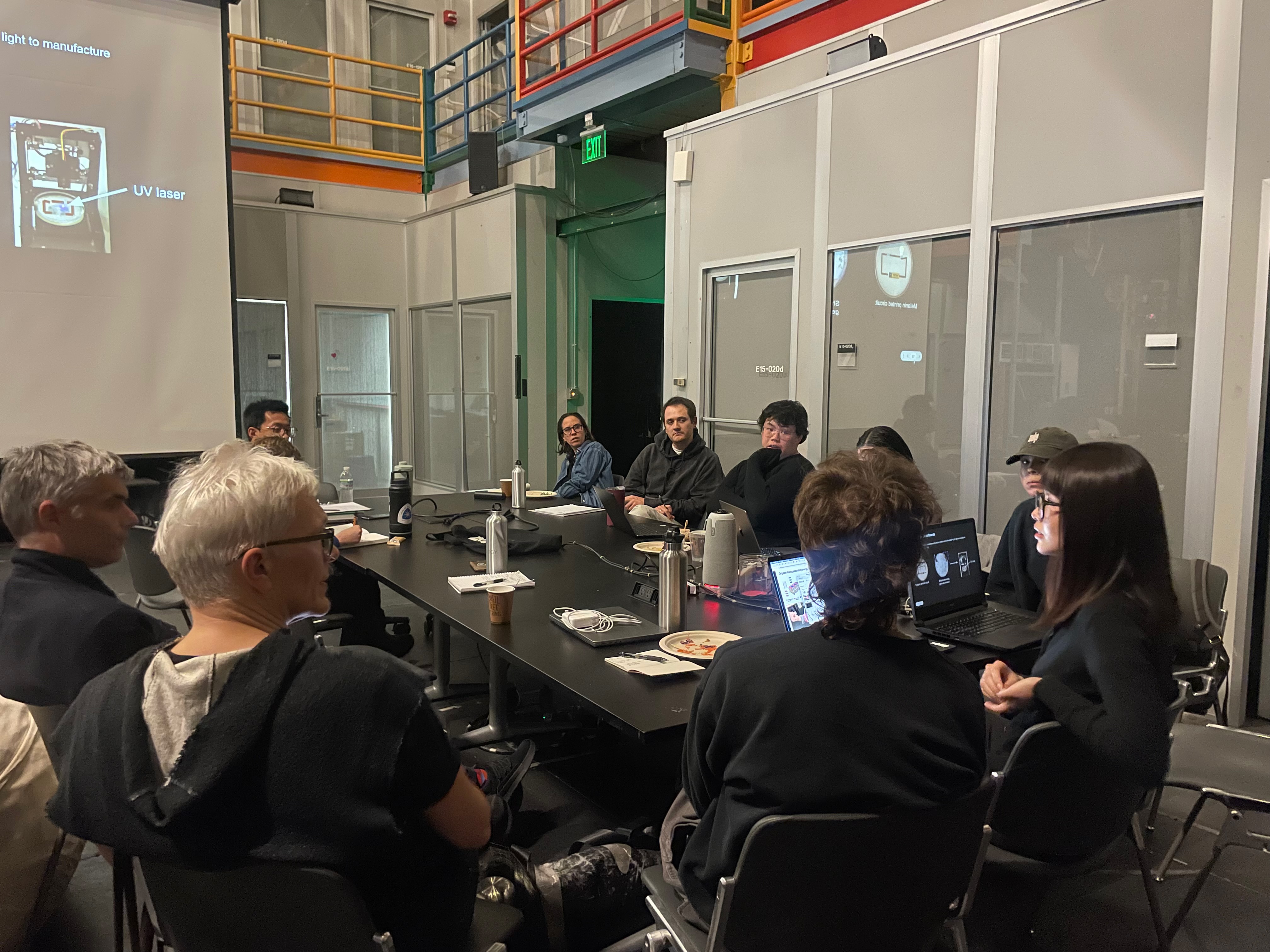
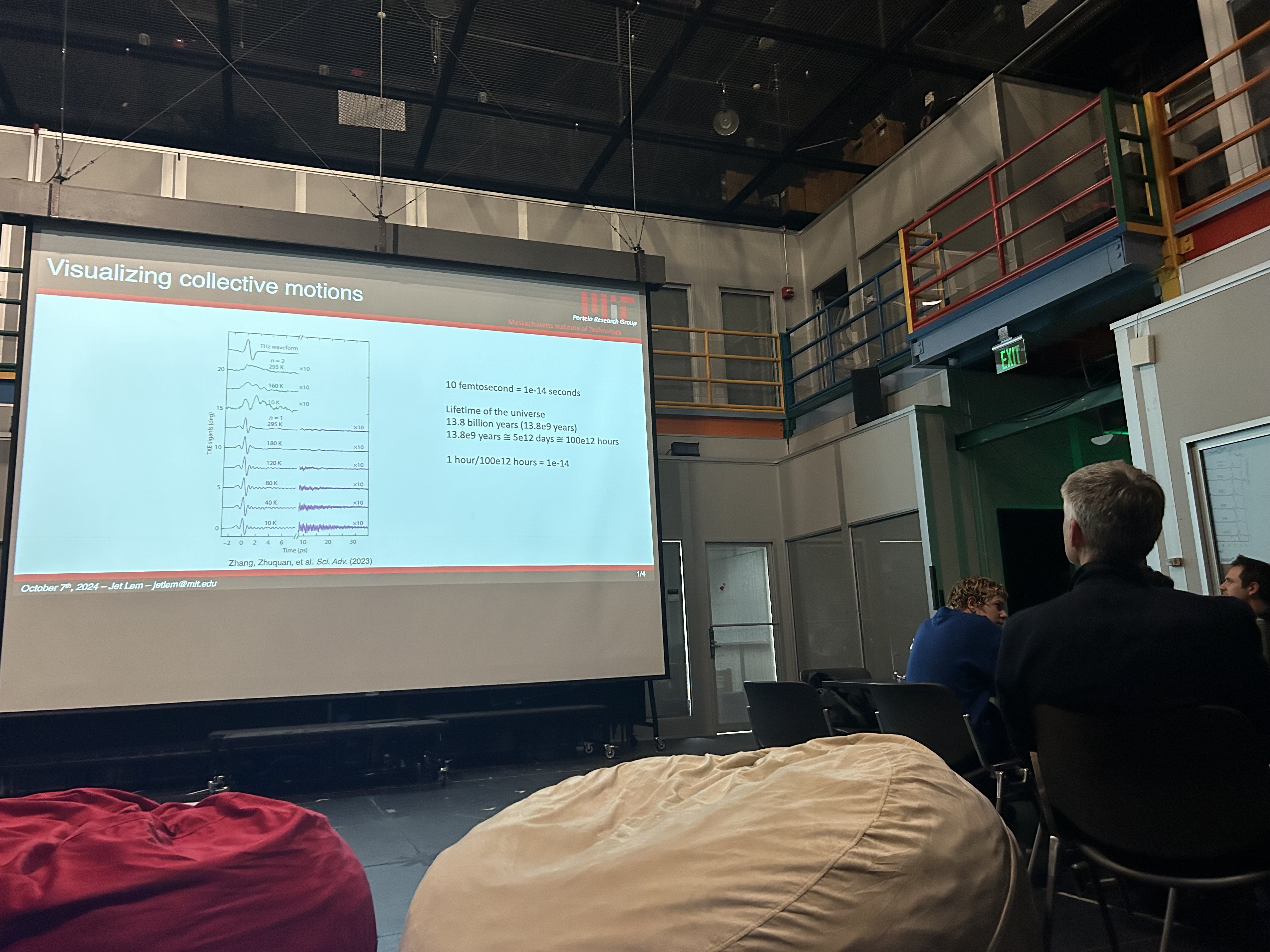
Every artineer event creates space for genuine exchange — not panels, but conversations; not demos, but experiments.
Intimate expert discussions — 10 to 20 participants, one focused question. Roundtables bring together practitioners across disciplines to think out loud about the future of art, technology, and education.
Expert talks from practitioners working at the frontier — researchers, artists, designers, and engineers sharing what they've discovered, built, or questioned. Open to the public; Q&A always included.
Multi-day creative-technical challenges where teams build real projects around a theme at the intersection of art and technology. Outcomes are real, shareable, and often continue as research projects.
Hands-on, skill-building sessions led by practitioners. Participants make something real — whether a generative piece of code, a bio-art experiment, or a physical prototype. Learning by doing, not watching.
We partner with universities, museums, institutions, and companies to co-host events at the intersection of art, technology, and education.
Whether you want to bring a roundtable to your campus, sponsor a hackathon for your community, or co-present a lecture series — we're interested in hearing from you.
We talk about your audience, goals, and what format would serve them best.
We co-design the format, theme, speakers, and outcomes together.
We host, facilitate, and document the event — outputs shared with all participants.
Join our mailing list for upcoming roundtables, lectures, and hackathons.